
52.399539
0.262363

Wordless Wednesday – Frederick Vernon Cross with his ventriloquist dummies in 1909 (aged 13.5yrs).
IWM and DC Thomson Family History launch Lives Of The First World War website – creating a digital memorial celebrating the bravery of those who contributed to the WW1 effort in the Commonwealth.
Back in February, the Imperial War Museums and DC Thomson Family History, tantalised the audience at Who Do You Think You Are? Live with their collaborative project – Lives Of The First World War.
In the months since, the site has been open to Beta testing, and today finally saw the site go live to the general public at www.livesofthefirstworldwar.org.
The idea of the project has been to build upon the records, and create a huge digital memorial that commemorates the lives of those who served in WW1 – whether they survived or lost their life.
I’ve jumped straight in to add my great grandfather, Herbert Martin, who served with the Suffolk Regiment and the Northamptonshire Regiment as a Private, but was sadly crushed to death in a train accident in Boulogne, France, on 17th October 1917.

It’s a sad fact, that I have a lot of other brave people to begin adding, and that this will take some time, but the collaboration is seen as one that will provide an archive that will detail the social history of the 8 million men and women from the Commonwealth who contributed to the First World War effort.
Find out more via the video below:
Interested?
The site is clean and pretty easy to use. It’s also free, up to a point (you pay for access to some archive material), but you can add content yourself. You can also ‘remember’ any of the people listed – which kind of acts as a bookmark for you. The site also carries a message saying that they are aiming to keep updating it to add further features.
I was keen to hear that there is an educational side to this site, and that the project is keen to see this site used as a school’s resource – in a bid to ensure that the service and bravery of our ancestors, is remembered for another 100 years.
Today’s ‘Tombstone Tuesday’ post features a headstone remembering 78 people who died in a tragic barn fire in Burwell, Cambridgeshire in 1727.
Standing in the grounds of the churchyard at Burwell, Cambridgeshire, is a double-sided headstone, remembering 78 people who burnt to death in a barn fire in Burwell in 1727.
The victims are listed in the Burwell parish burial registers as having been attending Robert Shepheard’s puppet show, and that an unattended candle, left by a servant named Richard Whittaker from Hadstock, Essex, caused the fire through negligence.
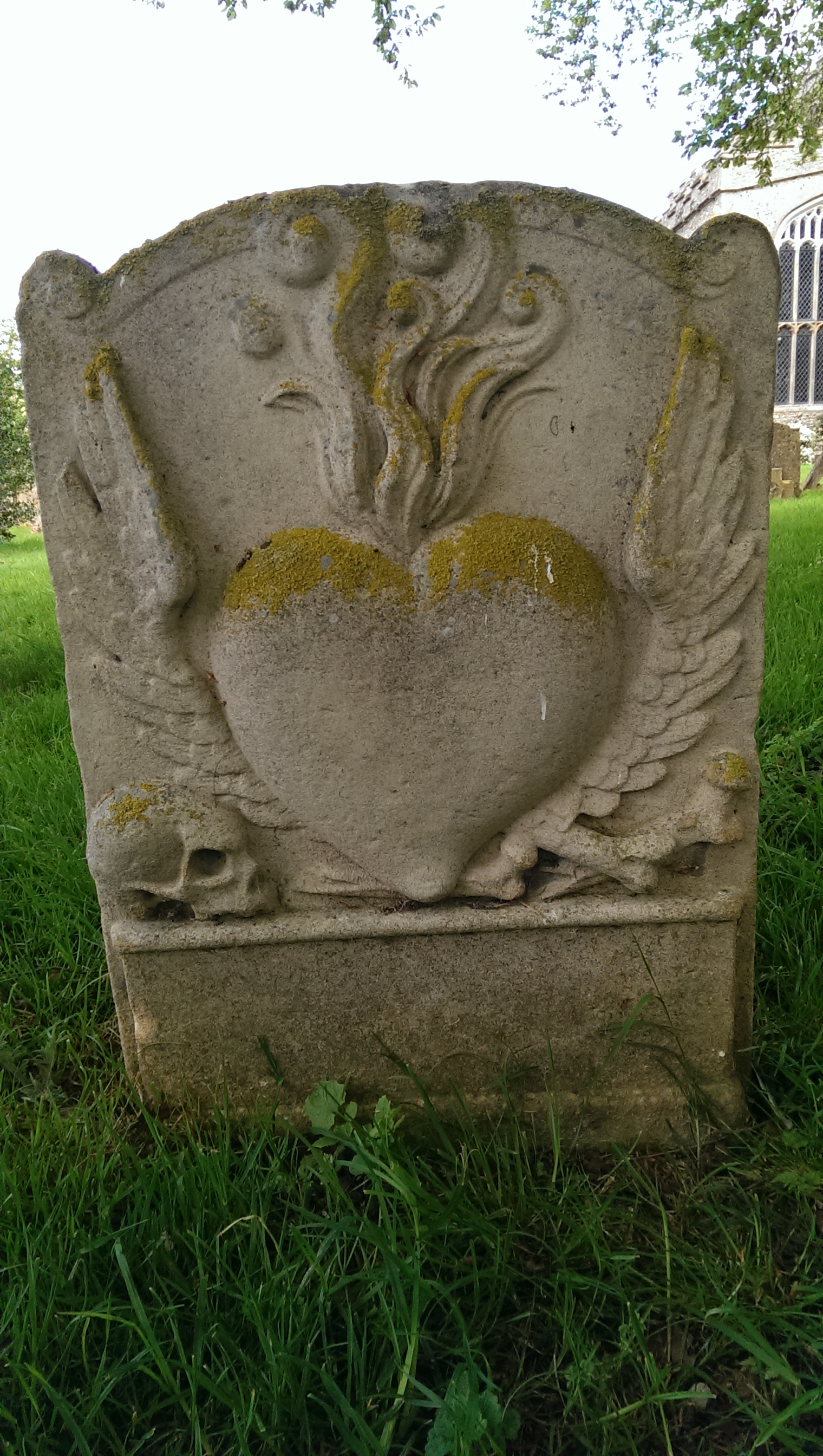
And the opposite side of the headstone carries a note.
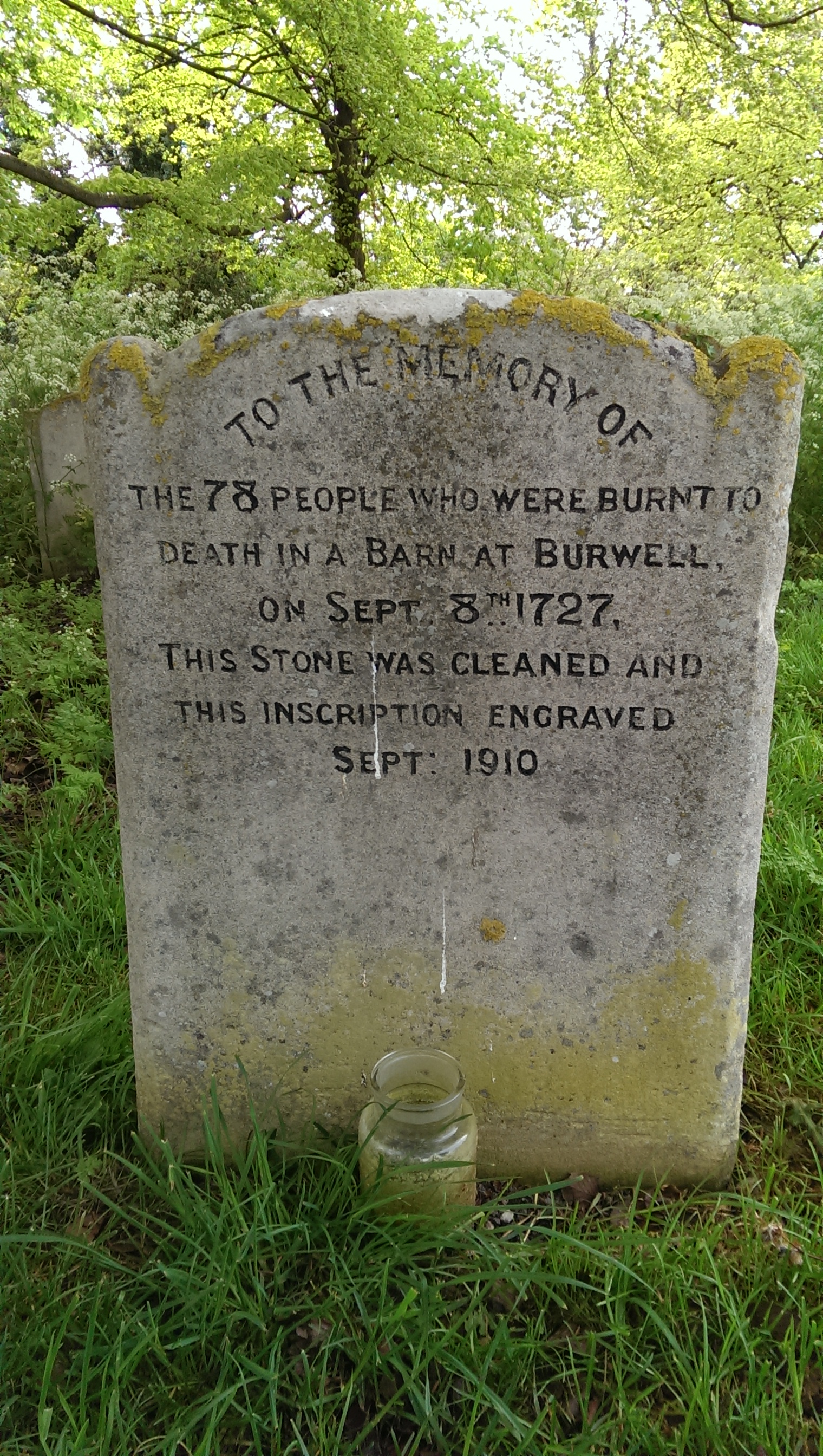
Robert Shepheard (the master of the puppet show), his wife, daughter, and two servants were amongst the dead.
Richard Whittaker survived and ended up in court. He was acquitted.
A story of 2 Bishops, 7 weddings, and 9 funerals – the struggle of life and love in the 19th century.
If you’re not a fan of Hugh Grant films, then don’t worry – today’s blog post is actually a story of a struggle for life and love in the 19th century.
As the title suggests, this probably isn’t going to be the most cheerful thing you’ve read today.
Only just a few weeks ago, some incomplete ‘parked’ research into two ancestors of mine (a father and a son), had suddenly moved from two male ‘Ag Labs’ in Cambridgeshire whose wives predeceased them, leaving them with several children, to two men who between them, married a further 5 times, and traveled across three counties.
I’d previously parked these two: John Bishop and his son Simpson, as the names connecting to ‘John Bishop’ in the small group of villages that he lived in, were all very similar and seemingly overlaping.
Similarly, Simpson Bishop occasionally appears as ‘James’ or ‘James S Bishop’ or variations on ‘Simpson’ (eg. Simson, Samson etc).
Whilst trawling through the Soham registers, I decided that I needed to map this puzzle out, so took each event with similar names and close dates and used a kind of card-sorting technique with post-it notes, each carrying a name, date, and event.

Having written all the names and event dates onto the post-its, I used each piece of evidence in turn to get them into order. The baptism, marriage, and burial registers were useful, as well as census returns.
Also invaluable here, was to keep an eye on the witnesses at marriages – as these also helped sort the events into an order.
With this done, and post-its on my wall, i realised that I’d just grown some new branches where I thought there were none.
John Bishop was born on 1st May 1795 in the Cambridgeshire town of Soham. He was the second of the eight children of Joseph Bishop and his wife Elizabeth (née Clements). He was also my 5x Great Grandfather.
Like his father, John worked in agriculture – a manual labour in the dark, flat, rich and fertile fenland that surrounded where he lived. In 1818, when he was about 22 years old, he married 24 year old Elizabeth Simpson (also of Soham) and the couple settled down to life together.
It’s pretty clear that at the time of marriage, Elizabeth was already pregnant with their first child, my 4x Gt Grandfather, Simpson Bishop.
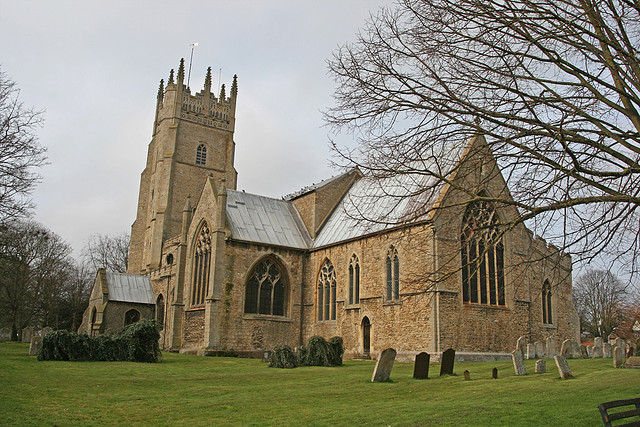
With Simpson being born in the latter part of 1818, the couple remained in Soham, where they went on to have a second son, John, in 1823.
Elizabeth fell pregnant again in 1825, this time with the couple’s first daughter, but by the time that she (Elizabeth) was born in 1826, her parents’ lives were about to change for the worse. Seemingly, either during or shortly after baby Elizabeth’s birth, Elizabeth, the mother, died. She was just 34.
She was buried at Soham on 11th June 1826, on the same day as her daughter’s baptism. This left 31 year old John Bishop as a widowed labourer with three young children in need of his care.
The grief must have consumed him, but it didn’t stop there – by the August, baby Elizabeth followed her mother to the grave.
Five months later, in January 1827, John walks down the aisle of Soham church with his second wife, Elizabeth Saunders. She fell pregnant shortly after their marriage, but again, bad luck was set to strike. Elizabeth gave birth to baby Elizabeth Saunders Bishop in 1827, but again, it appears that Elizabeth died during or shortly after childbirth. She was buried on 23rd October 1827 at Soham, once again – the same day that her baby Elizabeth was baptised.
Sadly, within a year, this baby also followed her mother to the grave. John, at the age of 33 had married twice, been widowed twice, fathered four children, and buried two of them.
Four months after his second wife died, John returned to church, this time to marry Sarah Leonard, who was fifteen years his junior on 8th February 1828. Their first child, Henry Bishop, was baptised at Soham in April 1829.
Thankfully both he and Sarah survived, with Henry going on to move from the fens of Cambridgeshire, getting married, and moving to Great College Street in Islington, London by the 1880s. John and Sarah continued to have three more children; Mary (who died as an infant), William (who survived and lived next-door to Henry in later life), and Sophy (who died as an infant).
After 8 years of marriage to Sarah Leonard, John (now 41) was widowed again in 1836 – when Sarah was just 26 years old. She was buried in Soham on 17th October 1836.
Less than a year later, John appears to embark on his fourth and final marriage – this time to Martha Earith, 17 years his junior – on 7th August 1837.
However, 8 months later, Martha died, aged 26 years. There is no indication of whether the couple had a child, or whether Martha was pregnant, but it appears that after 42 years of life in the fens, John never remarried. He died in May 1868, aged 73 years.
Sadly for Simpson, that oldest child of John Bishop and Elizabeth Clements above, he didn’t escape his own share of bad luck.
By the time that his father had remarried 3 times, and he’d witnessed the deaths and burials of 3 step-mothers, and three half-sisters, Simpson was 20 years old. A few years later, in December 1840, he married Elizabeth Taylor, also of Soham, and by 1842, they became parents to my 3x Great Grandfather, James Simpson Bishop (a nod to the baby’s grandmother). Six further children were born to the couple, during which Simpson worked as a labourer, and a malster.
During 1851, Simpson takes his family to Little Wapses farm in Twineham, Sussex (presumably as tenant farmers), but they return to Cambridgeshire by 1861, by which time Simpson has become a shepherd.
However, Elizabeth dies at some point between 1858 and census night in 1861, in her early forties. There’s a few certificate options here, so i’m busy looking for more clues (newspaper reports, marriage witnesses etc) before ordering a certificate. On 19th June 1861, at Newmarket Register Office, Simpson marries his second wife, Elizabeth Ellinor, a 36 year old daughter of a labourer from nearby Burwell.
Whilst researching, I jumped ahead to 1871 to see where Simpson and Elizabeth were, but couldn’t spot them. I eventually found widower Simpson and his four youngest children living in Reedsholme near Crawshawbooth, Higher Booths, Lancashire – and all employed by the local cotton industry at Reedsholme Works.
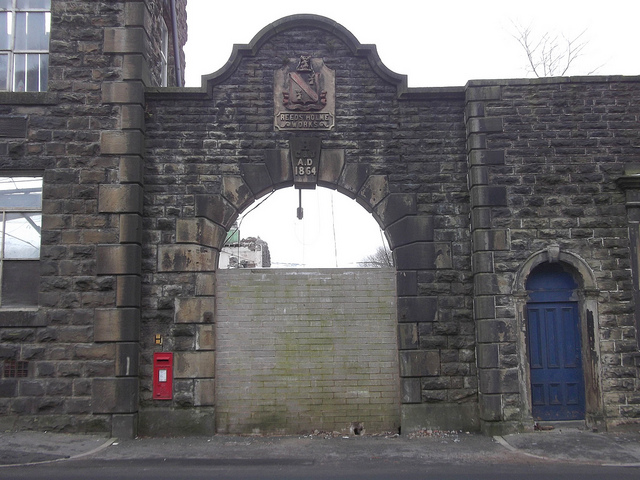
Life would undoubtedly been hard for the Bishops at the mill, and maybe it wasn’t the new life that they might have originally bought into. By the time of this 1871 census, two of Simpson’s children that had joined him in Lancashire had married:
It even seems that in 1875, whilst the family were up in Reedsholme, daughter Keziah died aged 22. I’ll order her death certificate out of curiosity to see whether it was due to work – as on the 1871 census, she is noted as a ‘Cotton Weaver’.
I found that Simpson, returned to church when on 25th January 1868, he married his third wife Sarah Washington. However, she’s missing from the 1871 family group (presumably dead too), and it’s not clear whether Simpson is married actually on the folio.
Simpson joins Sarah in my research as ‘currently missing’ after the 1871 census, but I hope to find the final steps of his journey.
Did Sarah survive or did Simpson marry again?
A journey that I thought I’d finished with him and his father a long time ago, back somewhere in Cambridgeshire… but which then proved to take me through unexpected twists and turns.
Thanks for reading… I’ll post an update once i’ve got further with Simpson and Sarah, but in the meantime; have you ever used card-sorting to solve a family tree puzzle?
Do you have ancestors who worked at Reedsholme Works, or in the cotton weaving industry?
Leave me a comment below – as i’d love to hear from you.
Who Do You Think You Are? Live 2015 to be held at the Birmingham NEC.
 Back in February, whilst at the Who Do You Think You Are? Live show in London, I picked up on some quiet concerns about the 2015 show.
Some people who were working on the stands were confused that they’d not yet been given the option to book for the following year’s show.
I also noticed that attendees weren’t being sold advance tickets (like some 2014 tickets were being sold from a small ticket booth at the 2013 show).
Was the three day event ending? Was it changing venues due to the imminent demolition of Earls Court and the subsequent squeezing of available exhibition space?
The answer seems to have come today, when I received my quarterly journal from the great team at The Cambridgeshire Family History Society.
In the corner of page 20 is a small advert stating that they ‘have been advised’ that the 2015 Who Do You Think You Are? Live show at the Birmingham NEC.

Whilst the official show website doesn’t currently mention the venue change yet, I’d heard this rumour floating around social media. It’s nice to finally see it for myself in print.
In the meantime, Glasgow will be playing host to a special Who Do You Think You Are? Live show on 29-31st August.
How would this venue change affect you if you plan to attend the 2015 WDYTYA show? Birmingham is about 1.5hrs drive west for me, or 2.5hrs by train (which involves travelling 1hr south to London, then 1.5hrs back up north). I might see if i can find a better plan – curse you Dr Beeching!
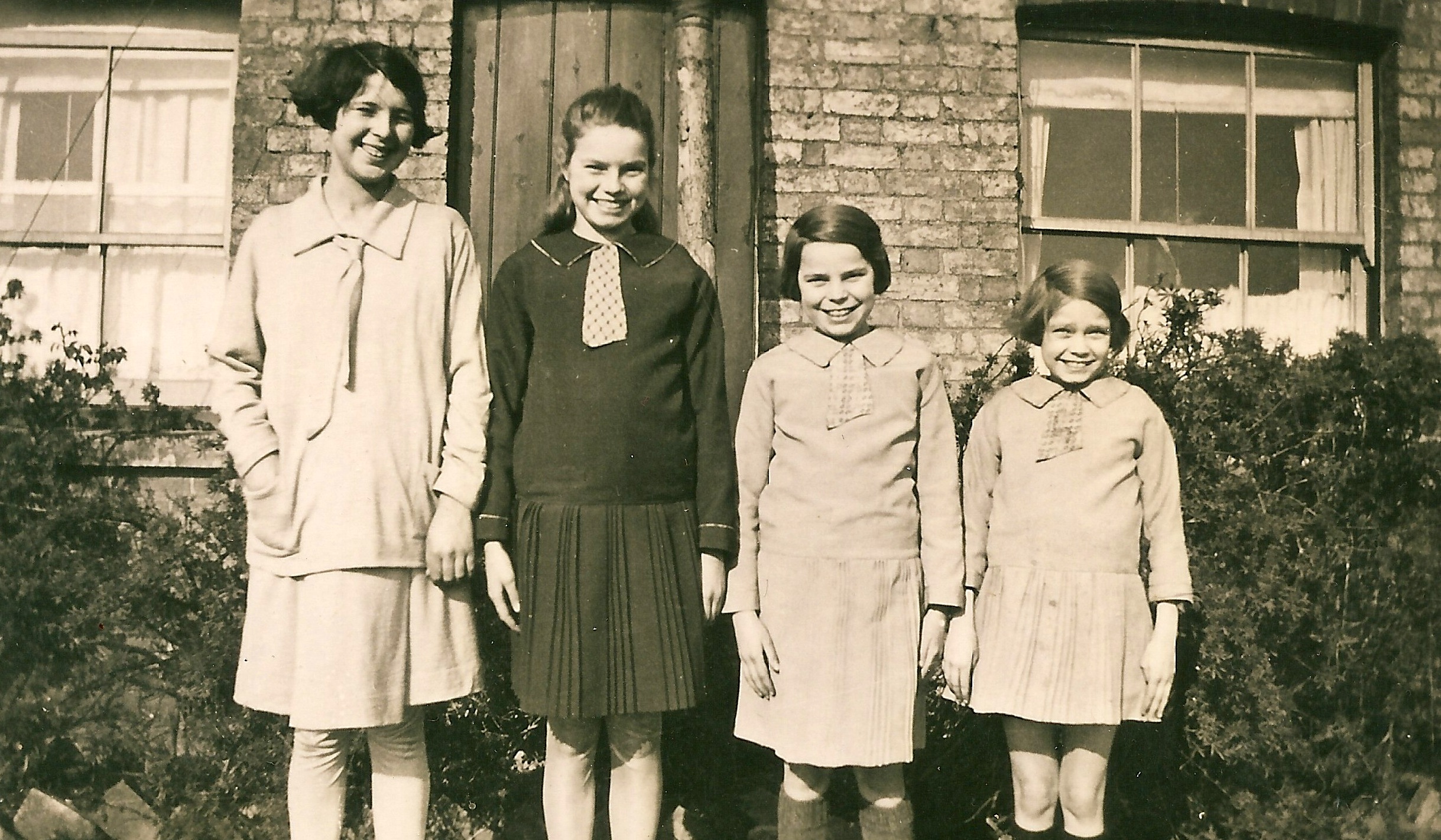
Wordless Wednesday: ‘Sisters’
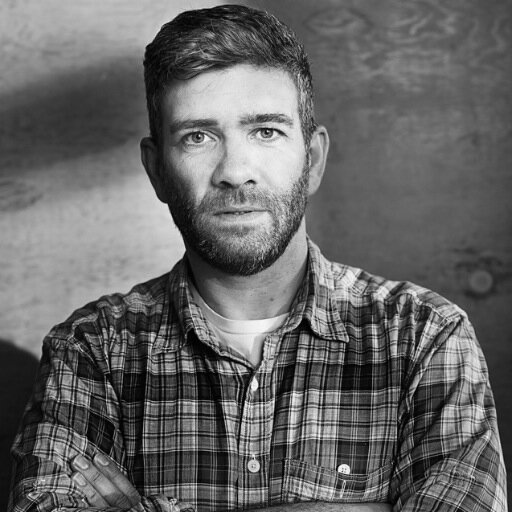
Cambridge Literary Festival presents a Masterclass: Writing Family History with author Richard Benson.
If you’ve wanted to write up your family history, then The Cambridge Literary Festival has announced an event that might be right up your street.
Richard Benson author of The Farm (2005) and The Valley – a century in the life of a mining family (2014), will be running a masterclass on writing your family history.
I’ve booked my ticket for the session, which takes place tomorrow, Saturday 5th April – 3:30-5pm, in Cambridge at The Divinity School, Lightfoot Room, St John’s Street.
I’m going simply because it’s time that I took the great stories that I’ve been stumbling across, and get myself writing them into immortality.
Richard’s written two memoir/biographical family history titles now, and what with his work for The Telegraph, 10, and Esquire, he must surely be a good source to learn from.
I’m surrounded by books, often talking to authors, meeting authors at events, and even have friends who are authors… so my excuses are running out, and it’s time to face my destiny and just get on and write.
No pressure there then, Richard.
The Great Great Aunt – photograph of my great great aunt Rose Ellen Martin, with her niece Mary Goodge – a photo that would have been taken around the time that Mary lost both of her parents in war.
This photograph shows my Great Great Aunt, Rose Ellen Martin, with her niece Mary Goodge.
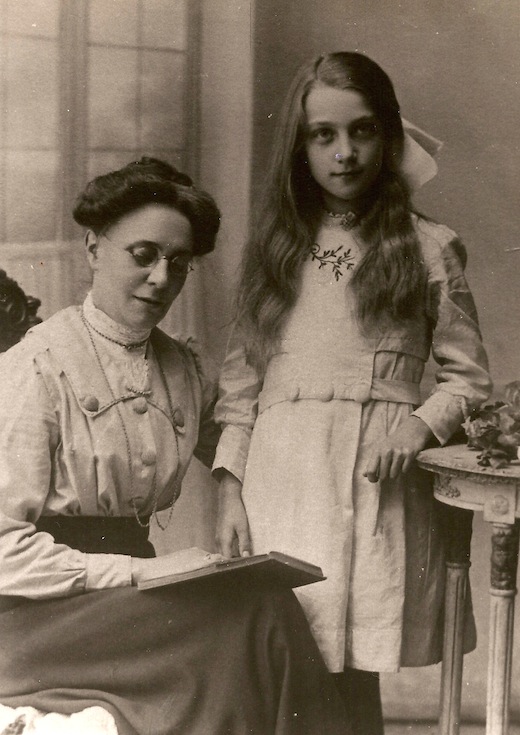
I’m unsure of Mary’s age in this photograph, but I imagine that it sits right on the cusp of the tragedy that claimed Rose’ sister Emma Jane Martin, Emma’s husband John William Goodge, and left a six year old Mary as an orphan.
Together with her mother (Mary’s grandmother, Sarah Elizabeth), and likely Mary’s other grandparents Henry and Amelia Goodge, Rose cared for Mary.
Mary’s father John died on 12th February 1917. He was Private 34480 of the Duke of Cornwall’s Light Infantry. He is buried in Pas de Calais, France in grave I.B.19 at the Wanquetin Communal Cemetery Extension. He was 31 years old.
Mary’s mother Emma Jane (Rose’s younger sister) died 7 months later on 17th September 1917, aged just 29 years old. Having tuned into family grapevine (yes, I know, dangerous… but it often contains clues and not always facts) I believe that a wall collapsed onto her. She was buried 4 days later in Littleport, Cambridgeshire. I’ve checked the British Newspaper Archive and the story hasn’t appeared there.. so this may be a death certificate purchase if I want to know the cause (as above, i know the date).
These losses would have been hard to bear, and unsurprisingly they weren’t alone. During a period of 11 consecutive months, not only did Mary become an orphan, but Rose also lost two of her brothers to the First World War.
The photo below shows Emma with Rose, some years earlier.
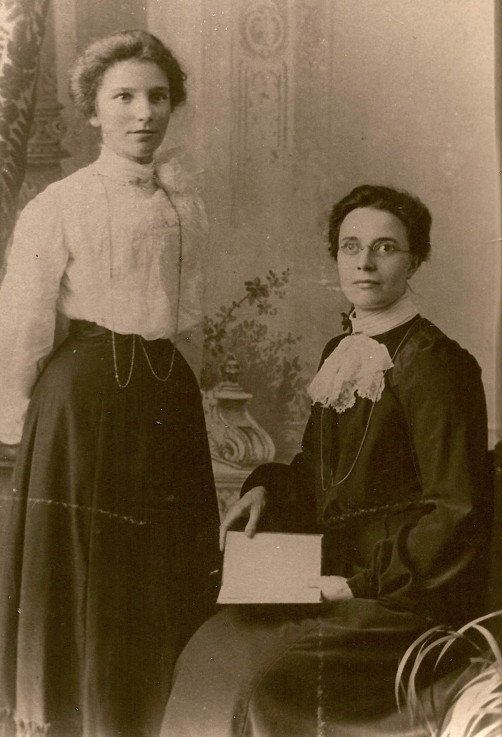
Rose remained unmarried, and never had any children of her own. She entered life of servitude at the age of at least 15, when she appears on the 1891 census as living at home as a ‘Domestic Assistant’.
She goes on to leave home, and by the 1901 census, she’s living in Clapham, London, and working as a ‘Parlourmaid‘ for Dental Surgeon William John Parks, of 32 The Chase. She remains here for at least another 10 years, where she appears living with Mr Parks’ widow Hannah in 1911.
After working for a doctor in Littleport, Rose went on to live a long life – reaching the age of 79 years when she died on 23rd May 1955.
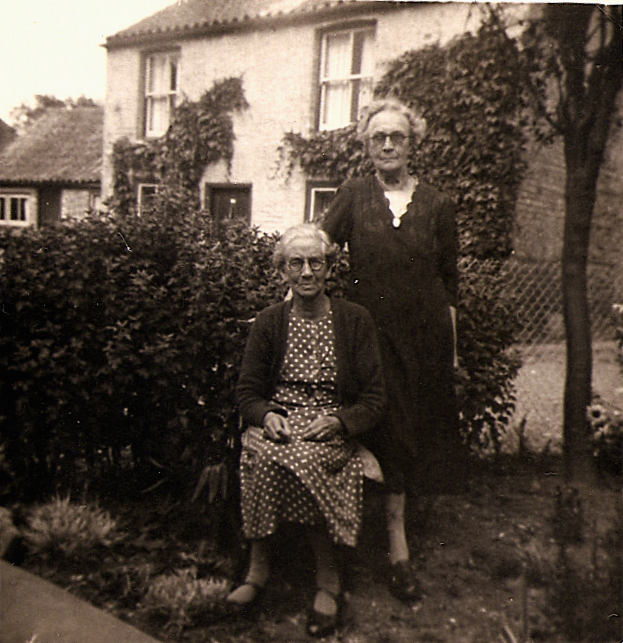
She was buried alone, with a headstone, in Little Downham cemetery.
As for Mary… technically she might be 104 years old by now.
Her life remains a complete mystery to me. With few ageing relatives left to ask, I’d like to find out what became of her before it gets any more difficult.
Did she marry, have children, or go into servitude like Rose? I’d love to find out.
The British Archives has announced that the 1931 Census of England and Wales will be online and available for free in 2015.
Thank you for all the readers and comments – yes, this was my 2014 April Fool’s Day post
The British Archives have announced that the England and Wales Census from 1931 is to be made available online for free and available earlier than its predecessors.
This has come as a great surprise to me, as I thought we were lucky to get to see some of the 1911 census before 2011 arrived, but in this surprise move, we’re going to see one of the most anticipated data sets here in England and Wales.
Access to the 1931 census, which records the population of Great Britain on the 26th April, will be a real treat for genealogists. It has widely believed to be one of the least likely censuses to be made available freely online.
The TBA Head of Digitalization, Ivana Pranker, confirmed that ‘the scanning process was completed in their warehouse in Hayes, in secret, back in August’ and that a dedicated team have been sanity checking it, and the indexing of the scanned records.
‘We expect that the whole census will be available to the public in 2015’.
The 1931 census sees the first time that ‘place of usual residence’ was asked – a piece of information that will allow family historians the means of deciphering where those mystery census night visitors actually lived.
Find out more about the 1931 Census of England and Wales, and read the full Press Release from TBA.
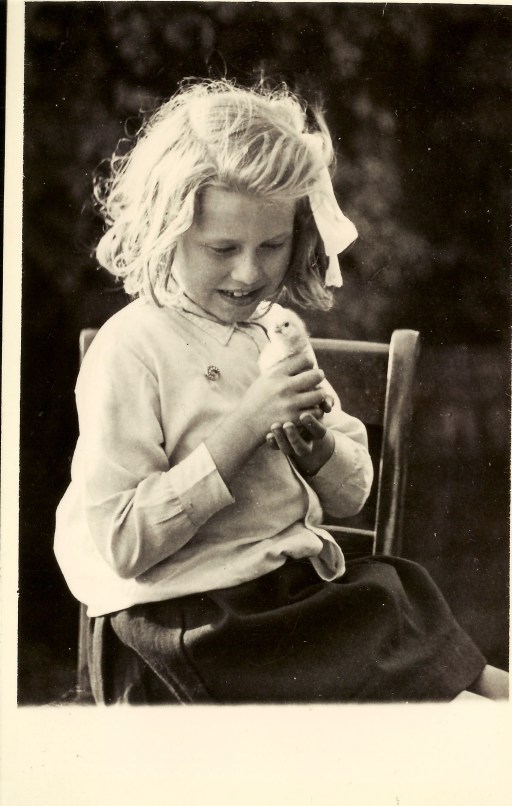
Wordless Wednesday – this week, it’s a photo of my Grandmother in her childhood, cradling a duckling, circa 1938.
 History Repeating