
Found a box at my Grandmother’s house..

.. opened, it oddly reveals a quill…

.. and some letters from the 1950s.

The letters are wedding acceptance letters to my Gt Grandmother, for my Grandmother’s wedding in 1953.

Wordless Wednesday – this week features a mystery box….
Utilising my search skills to see if i can find the celebrities that will feature in the 2013 BBC UK series of Who Do You Think You Are?

The internet is full of the great news and excitement that the US version of Who Do You Think You Are? has been picked up again by network TLC.
This has got me wondering who will be featuring in the forthcoming 2013 series of the UK edition of Who Do You Think You Are?, so I thought that I would employ my research skills to see if I could find out (naturally, I checked Twitter for those on-set spoiler tweets).
Comedian and writer Sarah Millican couldn’t be lured into giving any revelations about what is lurking in her ancestry – even after I offered my own prediction:
@familytreeuk haha. Not telling x
— Sarah Millican (@SarahMillican75) May 28, 2013
Gary’s involvement was confirmed earlier in the year, after he tweeted about it, joking ‘..I’m a descendant of The Elephant Man. Would explain a couple of things.’
Filming Who do you think you are. They won’t tell me anything about what we’re doing over next fortnight
— Gary Lineker (@GaryLineker) January 15, 2013
One helpful follower pointed out a possible ancestral trait (his ears) that might originate from the African plains!
Prediction: The Lineker ancestors will turn out to have invented the potato, which they originally used to kick around, as they didn’t realise it could be eaten.
A number of reports back in April suggested that Nigel Havers was filming his episode in Colchester, Essex.
Just seen Nigel Havers filming in Colchester for an upcoming episode of Who do you think you are? twitter.com/GlassOfBubbly/…
— Glass of Bubbly (@GlassOfBubbly) April 24, 2013
Having already mentioned the series in passing in an article in the Scottish Catholic Observer in September 2012, actor Brian Cox also seems to have filmed an episode in this cafe in Glasgow:
We’re going to be on telly! Who Do You Think You Are? were filming here today. Here are Carolyn &Clare with Brian Cox! twitter.com/CafeWander/sta…
— Cafe Wander (@CafeWander) November 14, 2012
Hollywood A-lister, Minnie Driver, turned heads at Stockton Library when filming her episode back in February this year. The article quotes her as researching her father’s family.
In a short series of tweets, she added this (amusing?) snippet of information:
staying at Crathorne Hall in Yorkshire, visiting my Dad’s past. Its basically Downton. Rather sad the dresscode is so informal
— Minnie Driver (@driverminnie) February 20, 2013
Have you spotted any more hints of who’s starring?
Who would you like to see go under the WDYTYA spotlight?
The BBC and Who Do You Think You Are? Magazine are yet to announce the official line-up of celebrities, and the date of broadcast.
In the meantime, while we wait for the new series, turn your speakers on, press play on the video below and close your eyes…. and imagine your very own episode..
Keep researching!
Andrew
Denny Abbey and The Farmland Museum are hosting two workshops on 5th October 2013 for adult family history enthusiasts.
Denny Abbey and The Farmland Museum has announced that it is hosting two half-day workshops for adults interested in genealogy.
 On Saturday 5th October, Michael Williamson and Ann Wise will be leading workshops for adults interested in getting started with their family tree, and methods for dating photographs.
Both workshops must be booked in advance, costing £5 each. You can find out more about how to book your place at their 2013 Programme of Talks, Art and Crafts Workshops for Adults page.
Michael Williamson explains how to get started with researching your family tree
Ann Wise will explain how to use clothing clues within a photograph to work out when it was taken. You can also bring your own photographs along.

Based near Waterbeach, Cambridgeshire, the site runs a yearly programme of education events, and this year I plan to attend the above event, and also hope to attend the basketmaking course – a skill that was my own Great Grandfather’s profession that kept a roof over his family’s heads.
This week, the Surname Saturday theme stops at the story of the 18th Century unusually named ONG family of Stuntney and Ely, Cambridgeshire.
This Saturday we’re on the trail of the unusual surname of Ong.
The earliest reference that I can find for my Ong family, is the first marriage of my Great, Great, Great, Great, Great Grandfather, Thomas Ong to his first wife Martha Jennings in Stuntney, Cambridgeshire in April 1757.

I’ve not found any earlier record for him, but estimating his birth to have been in the 1730s, I have found a few potential matches via familysearch.org in the neighbouring county of Suffolk in its villages of Hepworth and Hinderclay – themselves neighbouring parishes.
Martha was already heavily pregnant when she walked the aisle with Thomas, and they soon welcomed their first son – John Ong – into the family, with him being baptised at Stuntney just four months later.
The couple and their baby shift from Stuntney, to the nearby Ely which it overlooks. Sadly, this happiness was to be short-lived, and Thomas’ luck was going to take a long-running bad turn.
Within seven years, Thomas had lost his wife Martha (d. August 1764), and three sons: John (1757-1758), Thomas (1760-1764) and John (1763). No doubt deep in grief, a widower, and childless, he vanishes for 9 years, returning to parish registers in 1766 at Ely.
In January 1766, he marries spinster Martha Feast, and they are joined by their first child Mary. Sadly, Thomas’ bad luck continues – claiming the lives of their first three children: Mary (1767-1769), Thomas (1769-1773) and John (1772-1773).
It’s not until Thomas’ 7th child (and Martha’s 4th) – Mary Ong – born in 1774, that a child survives into adulthood. Mary was to live until she was 85, and is my Great x 4 Grandmother.
Thomas and Martha continue to grow their family with another 4 children: Martha (1776-?), Thomas (1778-1781), Margaret (1780-?) and Thomas (1783).
Whilst it’s unclear as to what became of Mary’s siblings Martha and Margaret, Mary seems to be the only child of 10 to survive – perhaps accounting for the rarity of the Ong surname.
Mary goes on to thrive – marrying my Great x4 Grandfather Thomas Cross in Ely in 1790, and bearing 14 children (only 3 of whom are known to have died as children).
Mary outlived her husband Thomas Cross by 13 years, dying in February 1859, aged 85.
I’ve only spotted two versions of the surname whilst rummaging in the records of Ely and nearby Stuntney.
However, the surname is so infrequent, that I am suspicious. Only one other ‘Ong’ appears, and as yet, she (Margaret Ong) remains unconnected – but probably the sister of my Gtx5 Grandfather Thomas. At the same time, and in both Ely and Stuntney, are rather a lot of parish register entries for the Long and Young families, and so with little imagination and some illiteracy, you could easily lose a letter or two, throw in an thick rural fenland accent, and you’re soon staring at an ‘Ong’ in a parish register.
FindMyPast.co.uk has added 450,000 more parish register entries to its collection – including 141,500 Suffolk baptisms.
Popular genealogy research site FindMyPast.co.uk has announced another tranche of 450,000 online parish records.

In a Press Release this morning, it was revealed that 141,525 ‘new’ parish baptisms from 1753-1911 have been added to the FindMyPast.co.uk website via a collaboration with the Suffolk Family History Society.
This is a fantastic boost for researchers of Suffolk ancestors, as well as for the FindMyPast site.
Amongst other records added at the same time were:
The records are available to view online now for users with PayAsYouGo, Britain Full, or Worldwide subscription.
This is perfect timing for me, as I’ve been waiting for Suffolk parish records to help me solve some research hurdles.
The 2014 Who Do You Think You Are? Live dates have been confirmed, but there’s a change….
You know how dates are one genealogist’s friend and another’s nightmare? Well, Who Do You Think You Are? Live 2014 show has been confirmed, but there’s a change.

Regular readers will know that I’ve been attending the Who Do You Think You Are? Live shows now for the past 3 years. Each year I’ve felt that I’ve got more and more out of it, with this year’s (2013 show) being the most interesting (really enjoyed the Richard III talk) and the most fun by meeting some of the people that read this blog, suffer my tweets, and write the magazine articles and blogs that I read.
Of the three days (Friday through Sunday) I usually go to the show on the Saturday – I find the travel less hassle and often cheaper (at least if you want to get to the show for the start) and the ordeal of the London rush-hour commute home is lacking.
In 2014, the show will take place on Thursday through Saturday, 20-22nd February. Apparently, earlier shows in the event’s history, used to take place earlier in a week, but later in the year.. so it’s not the first time there’s been a change.
I’m not particularly bothered by this, as I’ll either continue to attend on the Saturday, or make arrangements to perhaps stay in London for the duration or overnight so that I can catch whichever talks are the most appealing. However, I have seen a bit of negativity in the last few days.
Essentially, here’s what will make me happy:
That’s it.
Tickets go on sale on November 6th 2013.
Wordless Wednesday – this week shows a photograph of the children from Wilburton village school, Cambridgeshire, in about 1919-1921.

A family bible for the Nokes family (seemingly of Essex) sits unloved in the corner of an antiques store in Ely, Cambridgeshire.
‘A present from his father and mother on his 24th birthday’ reads the inscription inside the cover. It’s dated July 30th 1891. A loving gift of a huge family bible, but one that now sits unloved in the corner of an antique store.
Tucked at the back, in the corner, on an old sideboard, I stumbled across this 3-4 inch thick, weighty, black covered (leather?) ‘Holy Bible’. It sits in a display at Waterside Antiques in Ely, Cambridgeshire. I’ve been here countless times before – scouring the items for books, marvelling at the collection of 40s/50s clothing, and checking out any photographs I might find.
This bible has been sat here a long time. I usually come back to it to see whether it’s still there, or to see if it has dropped down from its price tag (currently £80, i think). I can’t justify spending that on something that I wouldn’t use, nor is it related to me, but the curiosity of it is tantalising, so I felt that I should help it on its way home…
I’ve taken some photos. The bible was given to Frederick Nokes in 1891. A few pages further in are the delightful collection of names and dates that any genealogist would love to stumble across:


Matching with the dates inside the bible (born 30th July 1867), FreeBMD gives one result – Frederick Nokes born in the Braintree (Essex) district, in the September quarter of 1867.
The book also notes the birth of Anna (which Ancestry.co.uk reveals as having the surname Willsher) in 1867, and then notes that they were married in 1892. Unfortunately the bible is devoid of locations, but some more FreeBMD and Ancestry.co.uk rummaging reveals the details here.
On the 1901 census, Frederick and Anna appear at Burrows Lane, Earls Colne, Essex. They are both 34yrs old, and alongside them are two of their children (again, matching the bible), Bertie and Harry. Frederick is noted as being a ‘Painter – Agricultural Machinery’. It is also noted that Frederick was born in Bocking, Essex, whilst Anna was born in Great Tey, Essex.
By the 1911 census, the couple still live in Earls Colne, and appear with 4 of their 5 children (one is noted to have died). As a nice touch, the handwriting on the census form matches that seen for the entry of ‘Winifred Ada Nokes’ in the family bible.
Children of Frederick and Anna:
The bible goes on to reveal that Anna dies in the Halstead district of Essex in 1963, aged 95, which is all corroborated with the FreeBMD records.
The most recent notation in this book is March 1965, regarding the death of Robert Frederick Noakes – noting that the ‘a’ in Noakes was added by the registrar.
By entering the Nokes data into Ancestry.co.uk (as a new tree) I was then able to explore a bit further – even uncovering photos which are identified as Bertie John Nokes, his wife Sarah, and son Roy.
This amount of personal detail makes me hopeful. Two Ancestry members seemed to know enough information about the Nokes family for me to feel like they would care about this unloved bible. I’ve messaged them both. At the very least, they can see the photos for themselves, but you never know – they might decide to buy it and bring it back into the family.
Do you have a family bible heirloom? Have you ever found a family bible with notes and researched the names?
Skeel – An unusual and widely mis-spelt ancestral surname that appears to have roots in 18th Century Middlesex, is this week’s Surname Saturday themed post.
An unusual and widely mis-spelt ancestral surname that appears to have roots in 18th Century Middlesex.
My most recent Skeel ancestor, Elizabeth, was my 4x Great Grandmother. She was born in 1802 in the village of Swaffham Bulbeck, Cambridgeshire, and was the oldest of a total of ten children – her parents having married the year before her birth.
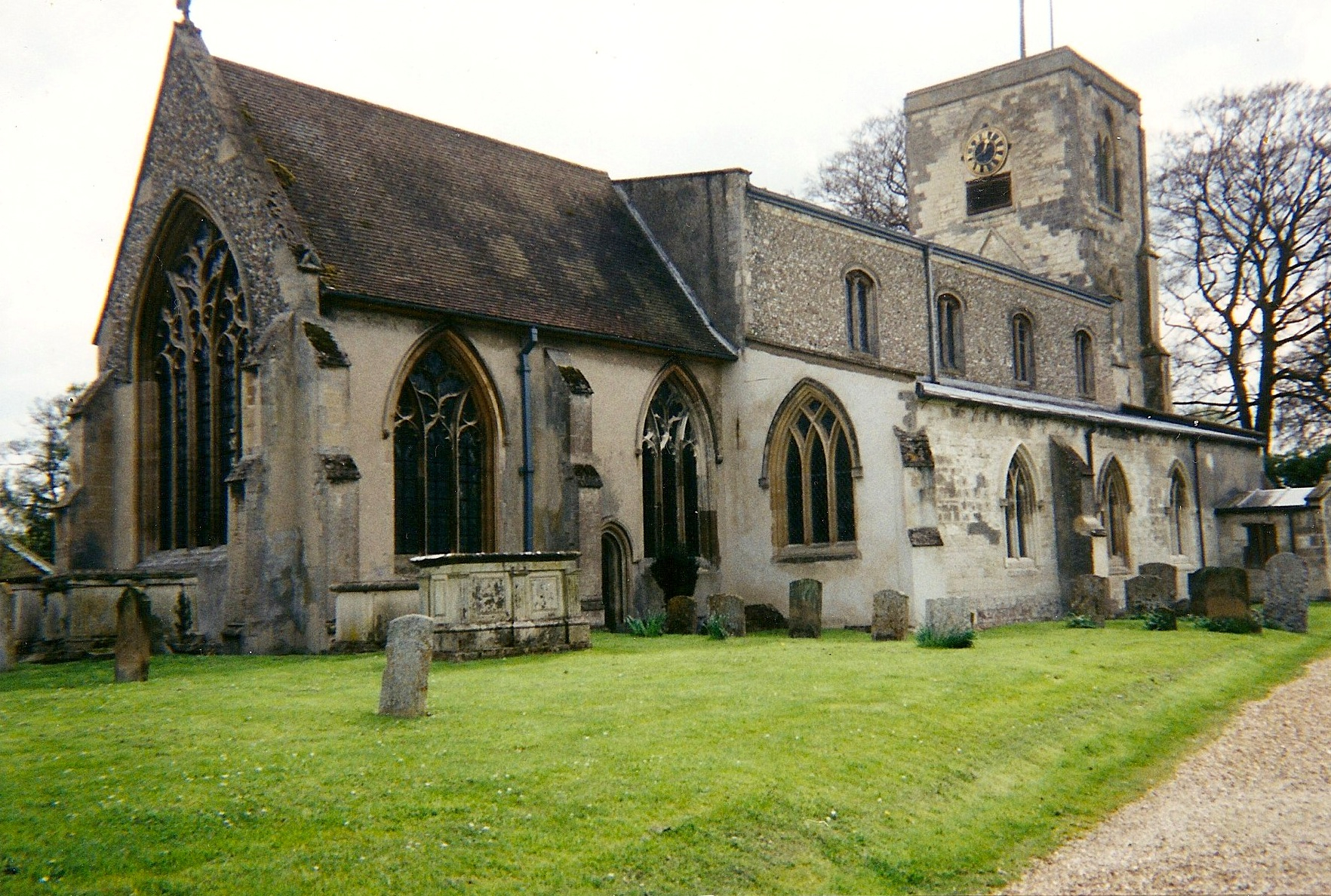
Elizabeth’s parents were Job Skeel and Elizabeth Richardson. Whilst Elizabeth was born and died in Swaffham Bulbeck (c.1781 – November 1872), Job’s origins were from outside this small village community, although he ended his days there in July 1860.
The only clue so far, as to Job Skeel‘s origins comes from the 1851 census (his last) – where it is noted that he is a ‘former Horse Breaker’ and was born Brentford, Middlesex (now part of modern-day Greater London). If his age was correct in 1851 (74 years), it means that he would have been born in approximately 1777.
In 1841, Job is noted as a ‘Fishmonger’ and because this census simply asks if the person was from within the county, it simply says ‘N’ for no.
Whilst there are many Skeels in and around Middlesex during the 1770s, there are also Skeels in Great Yarmouth, Norfolk – where a Job Skeels (of William and Mary) is baptised in 1777, and closer still to Swaffham Bulbeck, the surname appears in Chatteris, Cambridgeshire.
Great Yarmouth might have been where Job lived after his birth, because this would perhaps support why he’d become a fishmonger – with Great Yarmouth having been a major fishing port until it’s decline in the latter part of the 20th Century.
It is therefore unclear as to where his family were from, and whether they had only been in Brentford for a short while, having come from Norfolk or Cambridgeshire previously.
Further research of either the Brentford or Great Yarmouth parish registers may help to confirm his parents, and whether he had any siblings. For now, it remains a mystery.
The surname attracts a number of variants – possibly due to illiteracy, or maybe due to regional accents (perhaps further support of the potential Norfolk connection?).
The Cross family infographic – sharing stats based descendants from Thomas Cross and his wife Ann of 17th Century Ely, Cambridgeshire, England, including family members who emigrated to Australia in the 19th Century.
Riding on the back of the success of my previous (and first) infographic for The Barber family, which provided me with my most popular (traffic-wise) post ever on this blog, and a terrific amount of Facebook shares, here’s my second one featuring my Cross family.
The family are predominantly based within Cambridgeshire, but the data also includes a the many that emigrated to Australia in the mid-nineteenth century.

 History Repeating