Surname Saturday: Poll

This week’s Surname Saturday theme looks at the POLL family of Norfolk, their silk weaving roots, and fascination with Hebrew names.

This week’s Surname Saturday theme posting takes a look at the Poll family – one of the few Norfolk families in my tree.

My most recent ancestor to bear the surname of Poll was Elizabeth Poll, my Great Great Great Great Grandmother, who was born on 12th April 1796 in the market town of Wymondham, less than 10 miles from Norwich, in Norfolk.

Elizabeth was the oldest of the ten children of silk weaver Ishmael Poll and his wife Mary Fiddamont. Ishmael and Mary had married just 13 days prior to Elizabeth’s birth.

The couple went on to have 9 other children – including an unbroken line of 6 daughters before having their first son – then two more daughters – and ending on their youngest child in 1816, also a son.

Elizabeth married my great x4 Grandfather John Howlett in Wymondham, Norfolk on 17th May 1824, and my ancestry then passes through them and their son Thomas’s brief life.

Silk Weaving in 19th Century Norfolk

On the 1841 census, Elizabeth’s father Ishmael, is noted as a silk weaver despite his advanced years (he was 70yrs old). He dies in April 1847, predeceasing his wife Mary, who then appears on the following 1851 census living alone as a pauper.

Ishmael is most likely to have apprenticed for many years in the skills of producing beautiful quality silk weaving, and he would have most likely have worked from home, using huge weaving machinery.

It’s understandable to see why Mary was living in poverty after Ishmael’s death, as his trade was so highly skilled, that it is unlikely that she could have simply continued it on after his death without having had training.

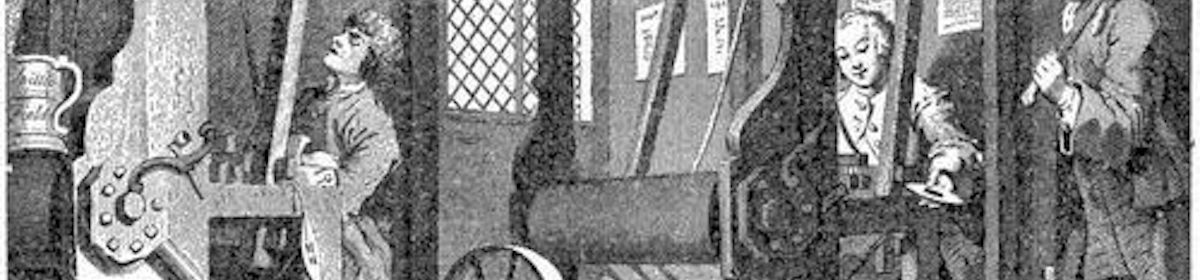
By Hogarth (The Industrious and the Lazy Apprentice) [Public domain], via Wikimedia Commons
A 1747 illustration of weaving from a series by Hogarth (The Industrious and the Lazy Apprentice) [Public domain], via Wikimedia Commons.

Hebrew names

The Poll family is not only unusual in my research because it comes from Norfolk, but it also provides me with some of my most usual names (in comparison to the rest of my family tree) in the 18th Century – Ishmael (male) and Keranhappuck (a female name) – both featuring in the Hebrew bible.

What inspired the use of these names, when the rest of the Poll children were fairly common names?

Earliest Ancestors

The earliest ancestors in my Poll tree are my Great x 7 grandparents – Simon Poll and his wife Ann. They would have been born around 1720, seeing that their son (my next ancestor – Great x6) was James Poll, born in 1741. James married a Mary Syers and they were the parents of Ishmael.

Surname Saturday: Levitt

This week’s Surname Saturday focuses on the Levitt family of Swaffham Bulbeck in Cambridgeshire, England.

This week’s Surname Saturday theme posting looks at the Levitt family, who lived in the village of Swaffham Bulbeck in Cambridgeshire during the 18th and 19th century.

Swaffham Bulbeck, Cambridgeshire
St Mary’s Church, Swaffham Bulbeck

My most recent Levitt ancestor was Emma Levitt, who was born in 1825 as the oldest of at least nine children of John Levitt (a blacksmith) and Elizabeth (née Skeels). She went on to become my Great Great Great Grandmother when she married Charles Newman (also of Swaffham Bulbeck) in 1847, with whom she had six children.

The earliest Levitt name bearer in the Swaffham Bulbeck parish registers appears on 12th November 1750 when my Great x6 Grandfather James Levitt married local girl Frances Roote (she was about 16 at the time).

James and Frances settled down to have nine children over a 22 year period. Their fourth child, and oldest son, born in 1758 was James Levitt – my 5x Great Grandfather. With this James having married Elizabeth Fabb and bringing three sons into the world, the youngest – John Levitt – was born in 1797. By 1824, John was married to Elizabeth Skeel, and his father was dead.

The faux-Hardings on the 1871 census
John and Elizabeth Levitt appeared as ‘Hardings’ on the 1871 census for Swaffham Bulbeck.

Swaffham Bulbeck was still home to the Levitt family, and would remain so during through the 19th Century census returns (including a stint where John and Elizabeth were disguised by their married daughter’s name on the folio – proving a small challenge to find them) whilst John and Elizabeth rear a brood of nine children – all of whom appear to have survived into adult life. The oldest of these is where the Levitt family name ends (at least for me), when their oldest child – Emma Levitt (born in 1825) married my Great Great Great Grandfather Charles Newman.

Emma’s Levitt siblings appear to have married and bore their own families, helping to keep the family alive.

Swaffham Bulbeck

Variants

There seem to be a few variants of the surname’s spelling, but the main ones that I have seen are: Levitt, Levit, Levet, Levett and Livett.

John Ayto‘s book “Encyclopedia Of Surnames” notes that Levett may have come from a few different origins.

(i) ‘person from Livet’, the name of various places in Normandy, of unknown origin; (ii) from the medieval personal name ‘Lefget’ (from Old English ‘Leofgeat’, literally ‘beloved Geat’ (a tribal name)); (iii) from a medieval Norman nickname based on Anglo-Norman leuet ‘wolf cub’.

Surname Saturday: GILBERT

Surname Saturday: GILBERT – The Gilbert family of Huntingdonshire and Cambridgeshire are the focus of this week’s meme day.

This week’s Surname Saturday post is that of my paternal Gilbert family. My connection is through my paternal Great Grandmother, who was born in 1884, in Littleport, Cambridgeshire.

With the help of the research of distant relative Colin Tabeart, the tree has been found to stretch back through time as far as 1694 when the family turns up in Abbotsley, Huntingdonshire (now part of Cambridgeshire). It is here that they are noted in the parish records and taxation records.

It appears that the earliest Gilbert I’ve found (with, as yet, an unproven connection) was in Abbotsley, Huntingdonshire in 1605, when a John Gilbert takes his daughter Maria to be baptised in the parish church of St Margaret on 24th February.

Abbotsley Church
St Margaret’s church at Abbotsley, Cambridgeshire.

By the beginning of the 18th century, the Gilbert families in Abbotsley were booming with each seemingly having at least 9 children, and up to as many as 13 children over a 24 year period – as was the case of James and Anne Gilbert between 1752 and 1776.

In 1767 at Abbotsley, Elizabeth Gilbert (née Hale) – the widow of James Gilbert – is noted as paying a Land Tax of £1, 19 shillings to a Mr Robert Edsope.

In 1828, the son of my Gilbert line – William – leaves Abbotsley and heads about 40 miles North East to Littleport in Cambridgeshire, where he married Elizabeth Brightly. The couple settle down in Burnt Chimney Drove – an area of rich agricultural fenland just to the North West of Littleport, where William becomes a farmer. The couple bear 12 children, although sadly a few of these don’t survive their early years.

Whilst William’s relocation may well have been because of his love for Elizabeth, his parents – Edward and Susan Gilbert have fallen on hard times –  by 1851 they are both noted as ‘paupers’ and are living with their daughter Mary and her husband Thomas Cade. Susan has become blind, but goes on to live another 8 years. Edward only lived until 1852.

Elizabeth Howlett and James Gilbert

Despite this hardship, William and Elizabeth were making progress for themselves and managing to live outside of poverty thanks to farming. Their 9th child (also Edward and Susan’s grandson), James, was my Great Great Grandfather, and he survived his two older brothers. In doing so, and in an act not unusual or unlike primogeniture, he inherited his father’s farm in 1879, which by 1871 had grown to 40 acres and employed one family.

By this time, James had got married to Elizabeth Howlett – and they had already bore two of their eventual family of nine children.

The family still lives and farms in the area today.

Surname Saturday: TINGEY

Surname Saturday – TINGEY or TINGAY. A look at the Tingey surname in Cambridgeshire.

An unusual surname with seemingly disconnected family groups turns up in both my maternal and paternal families.

Mary Tingey (1821-187?)
Mary Tingey

The Tingey name turns up twice in my family tree. Once as ancestral in my paternal tree, and the other as a husband of a maternal great aunt.

My earliest record of a bona-fide Tingey ancestor is Ann Tingey, who appears at the parish church in Witcham, Cambridgeshire in 1769 where she went to baptise her illegitimate son Thomas.

By 1771 she had returned, to marry James Toll with whom she had at least two children.

Thomas remained in Witcham, where he married Mary Barber in 1794 and together they had three children – Robert, Elizabeth and Sarah. It appears that the family moved just a few miles away to Oxlode in 1841 – a tiny hamlet close to the village of Little Downham, Cambridgeshire – which is where they ended up by the time of the 1851 census.

Robert went on to marry Fanny Harrison and together they had a family of 12 children, with their oldest (Mary Tingey) being my ancestor, born in 1820.

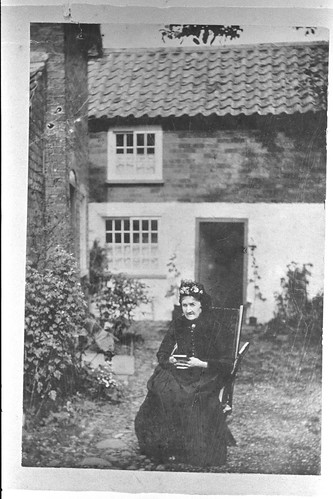
Amongst family photographs is a photograph of Mary in later life. By the time that this photo was taken, she would have either have been Mary Martin, widow, or Mrs Mary Watling(ton). She was married a total of three times.

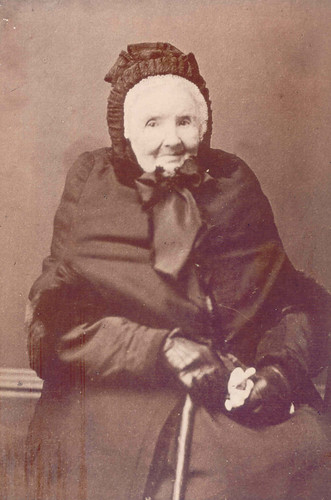
Another photograph is somewhat of a mystery – a carte de visite with the words ‘Aunt Tingey’ written on the back. It remains unclear as to whether this was an elderly maiden aunt, or a  wife of a Tingey uncle.

Aunt Tingey
The mystery ‘Aunt Tingey’

Other family groups

Whilst my own branch was busy living their lives and growing in the Little Downham area of Cambridgeshire, just four miles away in Ely appears to be another family group which I’ve never found a connection to.

Another group of Tingeys appear in Henlow, Bedfordshire. For many years I have been in correspondence with another researcher – but as yet there appears to be no link between the family groups. According to the researcher, there are many gravestones for Tingey name-bearers standing in the parish churchyard.

This unusual surname does have a few variants through the years – ranging from: Tingey, Tingay, Tingye, Tangye, Tyngy Tyngie.

Origins of the name

According to John Ayto’s ‘Encyclopedia of Surnames’, Tingey/Tingay are derivative of Tangye. He says that:

“Tangye from the Breton personal name Tanguy, a contracted form of Tanneguy, literally ‘fire-dog’.”

According to The House Of Names.com:

“First found in Cambridgeshire where the name first appeared in the early 13th century.”

Surname Saturday: Dunham

The DUNHAM family of Witchford, Cambridgeshire is the subject of today’s Geneabloggers SURNAME SATURDAY meme.

This week’s Surname Saturday post focuses on research I’ve been doing today. This morning I found my link to two new maternal family names, one of which is Dunham (the other is Foreman), so I’ve been typing this entry all day, covering the amount of information that I’ve uncovered in just a few hours.

Witcham church
Witcham parish church, Cambridgeshire, has seen a mixture of building extensions through the years, and more recently removal of headstones to ‘make the grass cutting easier’!

My connection to the Dunham tree happens in Witcham, Cambridgeshire in 1815 when John Hawkins married Jane Dunham. These two people were to become my Gt x 5 Grandparents, with my ancestry following down through their daughter Sarah Hawkins.

John Hawkins, who was illiterate at the time of their 1815 marriage, worked as a labourer. He was born about 1796 in Witcham.

Jane Dunham, who could at least sign her name in 1815, was born in about 1793. At the time of the marriage, the Banns and Marriage entries state that they were ‘otp’ (of this parish), however no trace of Jane could be found in the church records until the Banns.

The censuses

Having found the 1841 census entry for John and Jane, along with their growing brood of children (they had eight in all), the shortcomings of the 1841 census was unable to tell me which village Jane was actually from.

The 1851 census revealed the clue – it was Witchford – a village I have personally had connections to all my life, and in fact I was named after it (it’s St Andrew, although I wasn’t fortunate to be named the ‘Saint’ bit… yet). It’s one where several other of my ancestral families have lived and still do, and many of my ancestors and relatives have been buried.

Witchford, Cambridgeshire
St Andrew’s Church at Witchford, Cambridgeshire, home to yet another ancestral name.

With this piece of information I was able to rummage through the Witchford Parish Register and found Jane’s baptism in January 1794. Her parents were given as William and Alice Dunham.

The family grows

I then looked to see if this Jane had any siblings – with a rummage either side of her own baptism. I found four other siblings – 3 sisters and 1 brother. Having gauged the range of the births, I then crossed my fingers and looked for a William and Alice marriage.

There it was! William Dunham married Alice Foreman in Witchford in June 1789.

Next up was the burials. Another rummage revealed what seemed like an unfortunate picture:

  • William Dunham – he appears to have died in 1844, outliving all but his daughter Jane.
  • Alice Dunham (née Foreman) – died age 52 in 1821.
    • Elizabeth Dunham – the oldest, born in 1790. She died weeks later.
    • Alice Dunham – Born abt 1791, died in 1800.
    • Jane Dunham – my descendant, born 1793 – married John Hawkins.
    • William Dunham – Born abt 1797, appears to have died in 1799.
    • Rebecca Dunham – Born 1799, died 1800.

From this, it appears that after marrying Alice, they both have undergone insurmountable pain and heartache by outliving all of their children apart from my ancestor, Jane Dunham.

There’s no indication as to why the children died – disease? prematurity? harsh conditions? malnutrition? The possibilities could be anything at this period in history where life expectancy for adults wasn’t as it is today, and infant mortality rates were still high.

Surname Saturday: HALE

Continuing the Surname Saturday genealogy blogging meme by looking at the HALE family of Knotting and Potton, Bedfordshire.

For this Surname Saturday entry, I’m going right back to the late 17th century to tell you about the Hale family from a small village on the Bedfordshire/Northamptonshire border.

In 1660, with the death of Oliver Cromwell and the restoration of Charles II still fresh in people’s minds, a William Hale (b.c. 1621) and his wife Elizabeth from the tiny village of Knotting had welcomed their son Thomas into the world. By 12th August of that year he had been christened in the parish church. It’s not known yet whether Thomas had any siblings but I suspect that he probably did as there are some other Hales in the same village at the same time (a William and Eleanor Hale are having children in the same parish during the same period).

Knotting, Bedfordshire
St Margaret’s Church, Knotting

On 14th September 1686, when Thomas Hale was about 26yrs old, he married Bathsheba Jennell at Knotting parish church. Sadly, within 10 months he became a widower with Bathsheba being buried at Knotting on 21st August 1687. Research notes at FamilySearch.org show the birth of a daughter, Elizabeth in 1687, whom I’m assuming was the daughter of Bathsheba. Perhaps she died during or as a consequence of Elizabeth’s birth?

By 1689, Thomas had remarried to a woman known only (so far) as Elizabeth (possibly Elizabeth Fairy or Elizabeth Westcot – the Knotting parish registers will hopefully reveal this), and on 4th July the family returned to the Knotting parish church to christen their new son William Hale. William appears to have been the first of at least 10 children for this new family, with Giles Hale being the youngest born in 1703.

William worked as a tailor. By 1706, he had met and married Elizabeth Truelove in Potton. It was here that the couple made their home, bearing 11 children, starting with Elizabeth Hale in 1707 and ending with John Hale in 1725.

It appears that William died in 1730, with his wife following him to the grave in 1735.

The 1911 census for Knotting included a Mr Hale.

Surname Saturday: FREEMAN

Surname Saturday takes a look at the FREEMAN surname in Cambridgeshire.

An old name that stretches as far back as the Middle Ages.

Dating from at least the Middle Ages, it is widely believed that it was historically given to a person who was not a ‘serf’ (a slave) and were therefore quite literally ‘a free man’.

Distribution

In 1881, there were 19,124 people with the surname in Great Britain, ranking the surname as the 197th most common surname. Current estimates suggest that it hasn’t changed very much at all, with 24,892 (an increase of just over 5,000), placing it as the 208th most common surname. Over in the USA, there’s an estimated 162,686 people with the surname.

1891 statistics from Ancestry.co.uk show that the distribution of the surname gave a few concentration areas in England.

Freeman in Cambridgeshire

The most recent Freeman ancestor in my tree was Mary Ann Freeman, born in Prickwillow – a village close to Ely, in Cambridgeshire in 1837. She was the oldest of ten children of John Freeman and his wife Mary Grey.

Mary Ann married Edward Moden, an agricultural worker of Coveney. Together they had six children, the last of which (my ancestor) was born four months after Edward’s death in 1867. Mary Ann, with a large but young family, remained widowed until 1871 when she re-married to David Seymour in Coveney. A few months later, the family had moved to Green’s Farm in Ely, and they welcomed their first child together, followed in 1874 by their last child.

Mary Ann’s parents, John and Mary, were from Prickwillow and Ely respectively. John was one of 11 children of John Freeman and his wife Phoebe of Coveney. John (snr) was in turn, one of seven children of William Freeman and his wife Sarah, again of Coveney. Prior to this generation, the family remain a little tricky to locate, with only a few speculative possibilities – but all in Cambridgeshire.

Freeman as a middle name

There are two occasions in my tree, one of which is an ancestor, where the surname has been used as a middle name. Whilst middle names were often the maiden name of the child’s maternal side, which fits for John Freeman Moden, whose mother was the Mary Ann Freeman detailed above. The same cannot be said for John Freeman Dewey.

John Freeman Dewey (b.1856) was illegitimate. Therefore, the use of the name could be a nod to his paternity, like in the case of Sabina Steadman Taylor. Alternatively, the choice of ‘Freeman’ could easily just hark back to the origins of the name – ‘a free man’ (of no master – or father). The identity of John’s father remains, and probably always will, a mystery.

Surname Saturday: BABBAGE

This unusual surname takes me on a rare journey out of Cambridgeshire and down to the South West – to Devon.

In approximately 1816, Mary Babbage was born in Holcombe Rogus, Devon. She was the daughter of John Babbage, a labourer.

On Christmas Day of 1839, she married Samuel Burnell at Combe Florey, Somerset, where she made her mark [x] and was noted as a labourer. With her husband, they grew a family of 11 Burnell children.

However, the challenge is in securing the correct John Babbage. Despite this unusual surname, it’s the forename that really makes things tough as there’s quite a few John Babbages to pick from. With Mary’s birth being pre-certification, I’ve not been able to locate (for sure) her mother either.

The most likely candidate being a John Babbage born 1783, who married Rebecca Vodden. If this is the case, then it leads the family to the parish of Ashreigney in Devon. This John appears to die on 16th January 1868, with his Will and Codicil being proved at Exeter in June 1869. Here it names Ashreigney again, titles him as a ‘gentleman’ and that his son, James Babbage ‘a yeoman’ is one of the Executors.

Computer Pioneer?

Some articles suggest that Charles Babbage (1791-1871) an English mathematician, philosopher, engineer and (proto) computer scientist may have been part of a Devon-based Babbage family from Teignmouth. Other reports talk only of London, where a Blue Plaque has been added to a property in Dorset Street where his house once stood.
Was this mathematical genius a distant branch of my Babbage tree? The jury’s out, but I’d love it to be true.

Surname Saturday: CROSS

Information about the CROSS family from Ely, Cambridgeshire and their impact on the city, and travels to Australia.

Four centuries living in Ely, the Cross family is also one of the largest and most far-reaching.

With one of the earliest mentions of the family being a baptism in 1669 at Ely’s Holy Trinity Church, the Cross family went on to rapidly grow in to one of the largest families I have researched.

A growing family

My most recent Cross ancestor was my Great Great Grandmother, Mary Ann Cross who was born in ‘Buggs Hill’ (Cambridge Road), Ely in 1870, as the daughter of George Cross and his wife Sabina Steadman “Vine” Taylor. Following on with her parents’ business skills, she opened a shop on the corner of Barton Road and Cambridge Road in Ely which she traded from until her death in the 1950s. The shop closed in the 1980s and is now a private house.

Whilst Mary Ann was just the only one of George and “Vine”‘s two children to survive into adulthood, her father was one of 12 children. His father Jacob Cross, was in turn one of 11 children, and his father Philip Cross was one of around 15 children! As you can imagine, the potential for descendants from all of these children from the 3 generations is high and resulted in a large Cross population in and around Ely during the 1800s.

Finding a new life

For some though, Ely was perhaps too small with all these relatives around in the mid 1800s. Cross family groups like that of (another) George Cross and his wife Julia decided to start afresh in Australia. In 1855 they emigrated, following their older son Matthew who had already gone there to mine for gold. Julia was literate and a great letter writer, and a book of letters that she wrote to her mother back in England has been compiled and is now sold at Ely Museum.

Descendants of the Australian Cross families are many, but one – Pamela Phyllis McClymont – decided to set up the ‘Cross Family History Society’. Sadly Pam died several years ago, but she was pleased to pass a lot of information on about the family, including her own book ‘Who’s Who: Cross Family (Volume One, 1997)’ which details no less than 372 descendants from that 1669 baptism.

The Museum and the Tea Shop

One of the Ely’s Cross residents, Frederick Vernon Cross (known as just Vernon Cross) took on his father’s thriving bakery business on Forehill in the centre of the city. He transformed the business from being just a bakery into what is seen as Ely’s first tea shop, running regular advertisements in newspapers for delicious cakes and tea.

Part of the shop also became a space for Vernon to display the artefacts that he had found with his father at nearby Roswell Pits. These included many fossils and bones and his growing collection had begun to dominate the shop. On Vernon’s death in 1976, his private collection was saved by the then recently founded Ely Museum Trust. Today, the museum marks Vernon’s contribution to the collection with ‘The Vernon Cross Meeting Room’. Vernon also published an autobiography titled ‘Cross Words’, detailing his family, childhood, the bakery and his time at war.

The shop is now part of The Royal Standard public house, but if you go in, you’ll find that there are photographs on the wall of the old shop and even one of the shop signs is hanging on the wall as a nod to its history.

Check out the CROSS family at The Family Tree UK.

Surname Saturday: NEWMAN

The Newman family of Cambridgeshire are this week’s Geneabloggers topic for ‘Surname Saturday’ – a story of illegitimacy, windmills and dinosaur poop.

A killer windmill, illegitimacy and dinosaur poop all play a part in shaping my paternal Newman family of Cambridgeshire.

Alfred and Harriet Newman

My earliest known ancestor (so far) was John Newman, the husband of Hannah (née Squire). They lived in and were married in Fenstanton, Huntingdonshire (as it was then in 1750). There’s no record of any earlier Newmans before this date and after parenting my ancestor Philip in 1760, there doesn’t seem to be another mention of them again.

When Philip reached 19yrs old he marries Lydia Ingle in Haddenham, Cambridgeshire in 1779 and they begin a family together. However, after their sons Thomas and Philip are born, baby Philip and Lydia die – both being buried on the same day in Somersham. This appears to leave Philip (senior) with his young son Thomas.

In September 1785, Philip re-marries, to Elizabeth Whitehead of Haddenham. The couple soon grow their family – having six children, although sadly their first (William) and fourth and fifth (Robert and James) children do not survive infancy. This leaves two daughters (Ann and Rebecca) and William.

The Windmill

In 1809 tragedy struck as Philip, working as a Miller at the mill of William and Robert Pate of Haddenham on 20th July 1809 “was caught in the works of his mill, and unfortunately killed” – as reported by the Cambridge Chronicle, dated 22nd July 1809. Philip was promptly buried the following day at Haddenham parish church where the register notes him as being both a miller and a baker. He was 49 years old.

The mill (known most recently as ‘Neville’s Mill’) no longer stands, although the windmill (The Great Mill) opposite the site is still standing and is being lovingly restored – well worth a visit to see what working in a mill may have been like.

Elias Dann

Having lost her father to the horrific sounding windmill accident at the age of about 5yrs, Rebecca Newman gave birth to a son Charles Newman in Somersham at only about 16 years of age. Whilst she was not married, parish records name an ‘Elias Dann’ as the father.

Rebecca does not go on to marry Elias, as it would seem that Elias may have already been living with his wife in nearby Wilburton. Being a fatherless teenage single mother must have been excruciatingly difficult for Rebecca in the 1820s. However, by 1826 she had married  John Seymore of Haddenham and bore him two daughters.

It appears that illegitimate Charles Newman was fully aware of who his father was, as he names him when he marries Emma Levitt at Swaffham Bulbeck, Cambridgeshire in 1847. The couple also name their youngest son ‘Elias Newman’. The couple remain in the village, with Charles becoming a blacksmith, and have six children.

Coprolites

Coprolites (fossilised animal dung) were found to be excellent sources of fertilizer in the 1840s. Digging them soon became big business in the fens during the mid 19th century, although it began to decrease by the 1880s. Massive manual labour forces were needed to trace and dig out the seams of dung (you can even buy them today on ebay!) and my Newman relatives briefly became part of the workforce.

The 1871 census lists Alfred Newman (the son of blacksmith Charles Newman and Emma Levitt), along with his brother Charles as a ‘Coprolite Digger’. By the time of the next census though, the industry has downsized and neither are digging for dung.

In 1877, Alfred Newman marries Harriet Cooper in Ely, Cambridgeshire. It is here where the Newman family has reached today – with many descendants of their large family still in the city and surrounding villages.

The Newman family faced terrible tragedies, but they have survived.