My Top 5 New Year Genealogy Resolutions for 2014

My Top 5 New Year Genealogy Resolutions for 2014 – 365 days of intentions for family and social history research.

Following on from last year’s list of ‘genealogy resolutions’ here’s my list for 2014. If you missed my post from the other day, you can check to see how I got on with 2013‘s.

1. Find More Photos

I’m going to renew my search for family photographs of the siblings of many of my Great Grandparents, and their nieces and nephews. This will see me contact a number of distant cousins.

Here’s a few photos that I’ve got a tantalisingly poor photocopy of a photocopy of a…. etc, and really want to capture a hi-res scan of the photos included in what was a self-published 90’s family history book. The original author (a very distant cousin), is unwilling to go back through his notes, so I shall try the closer cousins instead.

The main photo i’m after, is a wedding photo of my Great Grandparents Alfred Newman and Clara Gilbert in 1909, which you can see in the photo below:

1909 Newman Gilbert wedding group
My Great Grandparents’ wedding on 2nd June 1909 – the only photo I have or have seen (of at least a 2nd generation photocopy) is on the wish list.

As you can see, it’s in a bad way, and as I also have another (high quality) group Newman-only photograph, I should be able to identify quite a number of the Newmans in this photo if it was also of a higher quality.

Fingers crossed!

2. Killing off my wicked Great x4 Grandmother

Yes, she’s back.. or rather, she’s still out there somewhere. As per 2013’s resolution, Mary Clarke ended up in court and eventually prison for neglecting, abusing, and playing the role of wicked step-mother to her husband’s children (he was also found to have caused neglect) during the 1840s. Whilst my Great x3 Grandmother Caroline Clarke (featured in the wedding photo above) escaped this, by being the much older first-born who went into service, the rest of the family ended up in poverty – including stints at the workhouse, where I think some of the children were also born.

Mary vanishes after 1881, by then a widow… but I will find her.

In a way, I will be relieved to find how she met her end, and feel like I personally, also get to put an end to it, as the court session report in a newspaper, which includes direct quotes from her and the abused children, is quite harrowing.

3. Spending 3 Days at Who Do You Think You Are? Live

I’ve booked my ticket for the entire 3 day show at this year’s Who Do You Think You Are? Live show in London’s Olympia in February (not long to go!).

Stands at Who Do You Think You Are? Live 2013
View across Olympia lower court at Who Do You Think You Are? Live 2013.

This will be my first time that I’ll have stayed for longer than a day, and so I hope to be able to meet lots of people who i’ve come to know through my research, through the contacts that i’ve made at the wonderful genealogy magazines and companies, as well as taking part in the #TweetUp, and attending lots of the workshops and panel sessions.

Right, i better book my hotel!

4. Sorting out the babies

There are two concentrations of births and deaths of infants in amongst the available certificates, and I want to work out which child belonged to which family. Parish records for Stretham and its neighbouring hamlet of Little Thetford aren’t necessarily revealing which Yarrow child belongs to which couple.

Similarly, in Little Downham, there’s a confusing number of Martin infants getting birth and death certificates, but without names and dates that completely tally-up.

Some of the children might never have reached the parish church for baptism, hence a lack of church records.

I already have a few of the certificates, which reveal scarlet fever, tuberculosis and other causes.

The only way to sort this out is to go on a spending spree over at the General Register Office (GRO) website to see what can be found.

5. Write that book (or at least start!)

So I have been collecting more and more stories, and have even drafted a few thousand words for a book, but my ideas and thoughts of this book has since become hazy.

What goes in it? Who does and doesn’t get their stories in it? What level of reader?

I’m currently sitting in the frame of mind that I’d like to write a book that contains a lot of visual content – which might be expensive in both rights, and in print, but I want to do a good job, and inspire people like me – who are motivated by shape, space, imagery (my interest in genealogy was very much sparked by finding a handwritten tree, and a load of glorious Victorian photos of mystery relatives). I want something that’s going to be picked up many times, that has big images running alongside text.

Keeping up with the Joneses - Valerie Lumbers
Reading how others have written up their research, has been fun and thought-provoking.

I don’t imagine that this will be easy, but working for a publisher, and having been a designer, and being friends with a number of people who have been published and have self-published, I hope to find a route through it. I’ve also tried to read family history books, including this one ‘Keeping Up With The Joneses’ by my friend’s aunt, Valerie Lumbers.

Firstly though, I need to focus on what the book is. And re-visit that couple of drafts i’ve written to see what can be pulled out and polished to help the book begin.

I’ve also been reading a number of eBooks on writing up family history, including: How To Write Your Family’s History‘ by Bartha Hill, and ‘Your Life Story: How To Turn Life Into Literature‘ by Kay Rennie.

What are your Genealogy Resolutions?

Last year, after posting my resolutions list, it seemed to spark interest amongst others including Valmay Young (hey Valmay, how did you get on?). Let me know if you’re taking part this year by leaving me a comment below, and perhaps a link to your list.

Have a very happy new year, and I wish you every success in your research this year.

Andrew 

Those top 5 genealogy resolutions of 2013

Catching a time-travelling grandmother? Killing off a child-abusing step-mother in 1841? Writing a book? …..Take a look back at how I’ve fared with my 2013 Genealogy Resolutions.

Last year, I made a list.

I’m not normally a resolutions type of guy, but I thought that it would be fun to do to try to help me focus on my research. It worked a little, but not as much as I would have liked, as I find it easy to go scrambling off on a tangent and chasing branches through different records. Before long, you find yourself about 7 surnames away from where you started.

However, it was overly productive, so I plan to have another 5 resolutions for 2014.

Before I reveal what I plan to do, I’ll just recap on the 5 resolutions from 2013

1. The Missing Bowers

I planned to crack my mystery Bowers connection. With my Gt Gt Gt Gt Grandfather Henry Bowers seemingly appearing out of nowhere, as a teenage groom at Wicken, I wanted to find his family. His subsequent Bowers family clearly have a Burwell connection, but whilst there are plenty of Bowers in both villages, and they seem to mingle, I’ve yet to find a mention of Henry.

In a bid to get further with this, I’ve looked at the parish records for Wicken and Burwell, alongside the census records, to try to see if there are any cross overs that would suggest that the Wicken Bowers family were living with Burwell Bowers on census nights, or appearing as witnesses etc at church events. This is a long, slow, arduous task, but one that I’m determined to complete. – INCOMPLETE

2. My time-travelling Great Great Great Great Great Grandmother

Elizabeth’s headstone in Stretham churchyard, suggests that she was buried alive when compared to dates in burial registers.

My Great x5 Grandmother, Elizabeth Yarrow (née Wright) seems to defy time by dying and being buried on a range of dates within a couple of years – thanks to a lack of death certificate (it was 1837, the year the certification was compulsory, but she seems to be missing), a headstone, and two differing parish burial registers. Her demise remains a mystery, with the only lead for her London death, turning out to be a small child of the same name. – INCOMPLETE

3. Writing that book

Writing a book when you’ve been researching an entire family tree for so long, can be hard. Sure, there’s plenty of material – heartbreaking stories, funny instances, and wonderful photographs and sources, but where do you stop and focus?

That conundrum aside, I’ve continued to collect material for this and hope to use 2014 to flesh out the ideas and the stories. – IN PROGRESS

4. Visiting places familiar to my ancestors.

With the benefit of living amongst the villages that my family have lived and worked in over at least the last 430 years, it means that I’m always visiting places that they would have known, and seeing the landscapes they would have worked.

I managed to make several trips to places they would have known, including one to try to find the location of my Great Grandmother’s (Daisy Burnell) birth in The Stables, Abercorn Lodge, Abercorn Place, London. No obvious sign of the Lodge itself, or the stables (even though they might have been absorbed by something else), so I assume that they have since been redeveloped into something else, but I enjoyed a sunny afternoon visiting the area, and imagining what it might have been like back in the 1880s when she was born. – ACHIEVED

Abercorn Place sign

5. Killing off my wicked Great x4 Grandmother

My step-child-abusing wicked Great x4 Grandmother, Mary Bailey (née Clarke) went to prison for her crimes in 1841. After serving her time and living a short family life, she ended up back in the workhouse twice, which is where I last saw her, as a widow. She continues to roam, and I won’t rest until i’ve bumped her off. – INCOMPLETE

As you’ll see from above, there’s quite a few incomplete ones there… so to help sort that out, I’ve just borrowed a friend’s research tool to help speed things up…

Andrew Martin makes genealogy easier by flying the TARDIS into research brick walls.
I’ve found that genealogy is easier when you fly a TARDIS into research brick walls, although I my Great x11 Grandmother loves my iPad Air.

2014’s resolutions…

Tune in tomorrow for my top 5 genealogy resolutions for 2014.

If you like this idea, then leave me a comment and/or link below to your resolutions blog post.

Have a wonderful end to 2013. And I wish you a prosperous, family filled, 2014!

Andrew

EVENT: ‘Next Steps in Family History’ Day School, Dec 7th, Cambridge

A ‘Next Steps in Family History’ day school (10am – 3.30pm) is to take place on Saturday December 7th 2013, at Cambridge Central Library.

Cambridgeshire Libraries and Archives logoA ‘Next Steps in Family History’ day school (10am – 3.30pm) is to take place on Saturday December 7th 2013, at Cambridge Central Library.

The session will be covering a range of subjects – all of which are essential to researching your family tree – and not just in Cambridgeshire.

Topics include*

  • Finding and Using Parish Registers
  • Military Records
  • Occupational Records
  • The British Newspaper Archive
  • Poor Law and other original records

Coffee is served, but lunch is not provided. The library is in the centre of Cambridge, and even contains its own café.

The Day School isn’t free – it’s £25 per place, and going by my years of experience of visiting and communicating with the team at Cambridgeshire Archives and Local Studies team, and The Cambridgeshire Collection, you’ll be in good hands.

For more information about the event, take a look at The Cambridgeshire Collection website for details on how to contact them. 

*Don’t shoot the messenger if this changes – check beforehand!

Surname Saturday – the Harrison family

Surname Saturday: Today’s Surname Saturday post takes a look at the HARRISON family, who lived in Cambridgeshire during the 18th Century.

This week’s Surname Saturday themed post looks at the Harrison family who have lived in the Cambridgeshire village of Little Downham since at least the 18th century.

Finding Frances Harrison

The most recent brush with the Harrison family is through my Great x 4 Grandmother, Fanny Harrison – often also named ‘Frances’.  She first appears in the village of Little Downham in Cambridgeshire in 1802, and was the fifth of eight children to Richard and Esther.

Fanny married Robert Tingey on 17th December 1820 at the Little Downham parish church. She was illiterate and signed the marriage register with an ‘x’. Robert was about four years older than her. The couple settled down to grow a family of at least 12 children over 28 years. My Great Great Great Grandmother, Mary, was their oldest child, born in 1820.

All seems well documented for Fanny and Robert, but when it comes to the 1861 census – right in the middle of a documented run – they’re missing. Both appear in the same street that they were in in 1851, and remain there in 1871, but where did they go for 1861? Searches on Ancestry and FindMyPast have proven unsuccessful, and in my attempt to avoid the simple transcription errors, I’ve also view the entire scanned set of folios for that area.

The 1861 census for Ely was destroyed in floods, and unless the couple are hiding under a different surname for a census (which happened for another part of my family), then maybe they were visiting someone and are recorded as so on the now lost Ely census. The mystery continues.

The 1970s Harrison Red Herring

Fast forward for a bit to about 1974, and my sister’s baby record book. In this keepsake is a family tree. This was probably the first family tree I ever saw (although not the one that got me into family history), and noted on it, is a mystery Harrison relative as my paternal great grandmother.

A family tree in a baby's keepsake book
A mystery and erroneous Harrison relative appears too recent in this tree from my sister’s baby keepsake book from 1974.

This Harrison appearance was two generations too late, and the role here belongs to Daisy Burnell.

Whilst the appearance of an error here is a red herring, it does at least suggest that the knowledge of a Harrison connection was there, handed down the family.

The 18th Century Harrisons

Let’s head back in time again, to Fanny’s parents – who appear to have been Richard Harrison (b.c.1770) and Esther (b.c.1772, d.c.1826).

Fanny was the fifth of their eight children – all christened at Little Downham, Cambridgeshire:

  • Elizabeth (b.c.1791)
  • Mary (b.c.1793)
  • Hannah (b.c.1796)
  • Richard (b.c.1798)
  • Fanny (1802-1881)
  • Sarah (1804-?)
  • Esther (1806-?)
  • Rebecca (1808-?)

Richard’s parents (Fanny’s grandparents, and my 6x Great Grandparents), appear to have been William Harrison (bc.1746, d.c Nov 1819) and Margaret Granger (d.c. March 1798).

I’ve yet to locate their marriage, but they themselves became parents in about 1764, when the first of their eventual nine children (William) was born.

  • William (b.c.1764, d.c March 1810)
  • Granger (b.c.1766)
  • Elizabeth (b.c.1767)
  • Francis (b.c.1768)
  • Richard (b.c.1770 – and the Richard mentioned above)
  • Mary (b.c.1773, d. July 1774)
  • Mary (b.c.1775)
  • Ellin (b.c.1777)
  • Margaret (b.c.1779)

Granger Harrison

Of this group of children, you’ll notice that the second child (a son) has fortunately been given the maiden name of his mother as his first name. With it being unusual, it makes him fairly easy to spot in records, and even turns up in google search results.

Come 2nd February 1816, Granger Harrison, who now appears to be living in the nearby hamlet of Pymoor, but ‘is about to quit his farm’, is having a live and dead stock auction. Everything from standing crops, to land, to animals through to a ‘large heap of manure’ is listed for sale in this notice published in an edition of the Cambridge Chronicle.

A Sale Notice for Dead and Live Stock belonging to Granger Harrison in 1816.
A Sale Notice for Dead and Live Stock belonging to Granger Harrison in 1816. Click image for original.

It seems that Granger probably remained in Little Downham, where his grandchildren were baptised. One of which, was also named Granger Harrison (b.c.1841, d.1910) – and who is equally blessed with turning up in census returns and search results.

This Granger Harrison is my own 2nd Cousin, 5 times removed… so pretty darn distant.. but with my own connection to the Harrison family being a little distant, and entirely photo-less, I’ll cast the net wide.

Here, Granger junior appears on the online family tree of Pete Bradshaw and Wendy Often. The site seems like it hasn’t been updated for a while, but I’ve sent them an email in a bid to expand my Harrison tree further.

If you have Harrison, Tingey, or Granger ancestors, drop me a line!

Andrew

GALLERY: The abandoned Aldwych tube station

Photos from a tour around the abandoned Aldwych underground station, London.

On a slight tangent away from my usual blog post topic, I wanted to share with you the photos from the excellent tour that I went on this evening with 39 others, at the abandoned Aldwych Station in London.

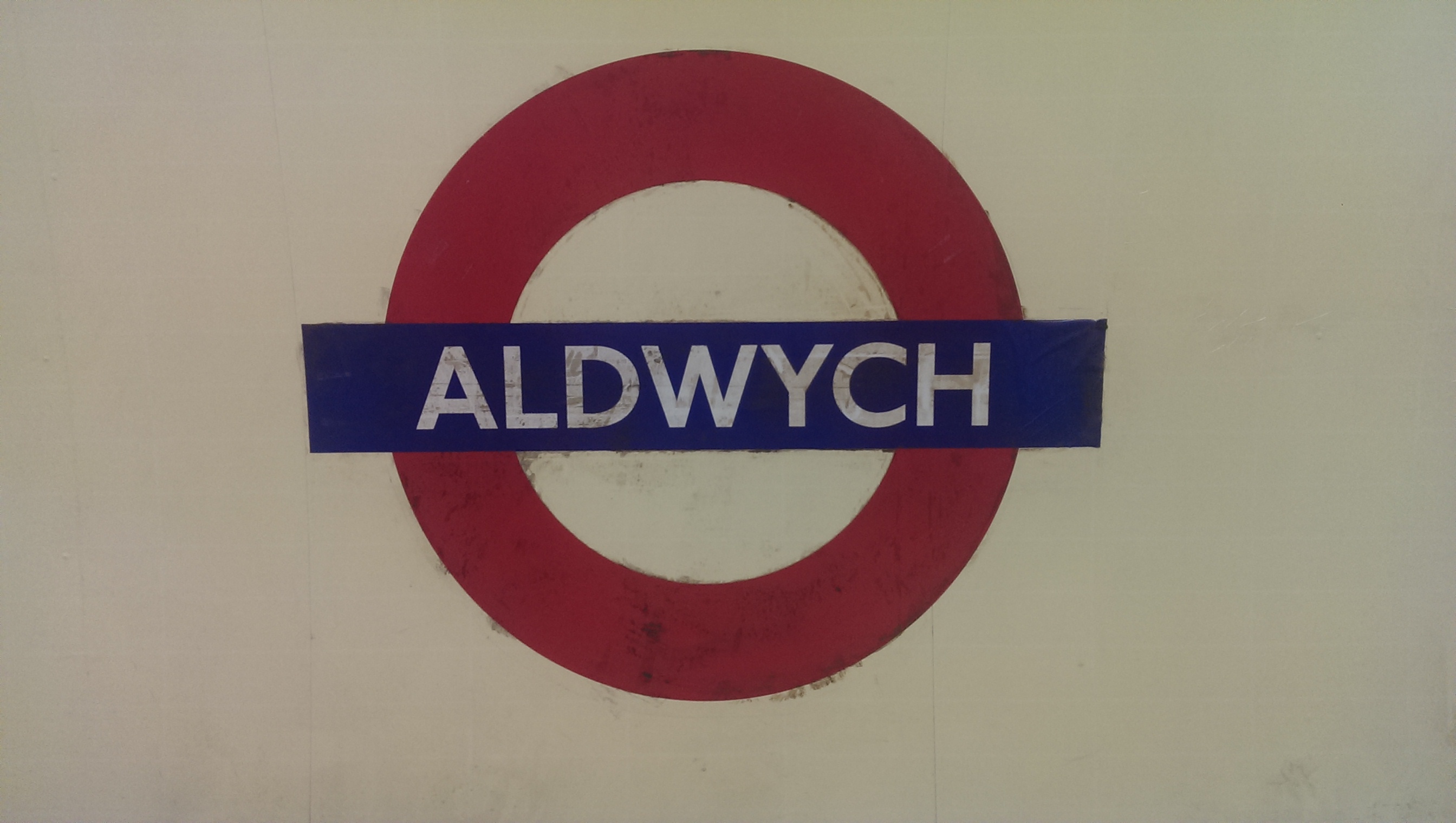
Aldwych underground sign

Expertly led by a group of volunteers, 40 of us queued to get inside one of London’s lost destinations – Aldwych Station (although for a while, it was The Strand).

In a 55 minute tour (all sold out now!), a group of volunteers explained the development and demise of the station – how it was almost not built at all, how it very quickly became apparent that it was not feasible to complete, and how the station’s lifts caused it to finally close in 1994.

London Transport Museum‘s tour was fascinating – we walked three platforms, incomplete tunnels, stared at period posters (we were assured that they were copies rather than the real Edwardian posters), learnt about the ghost that is believed to date from the station’s predecessor The Strand Theatre (a topic that TV’s Most Haunted tried to explore).

Here’s the gallery – simply click a photo to go large (and instigate the slideshow).

Who Do You Think You Are? Live 2014 tickets now available!

Tickets for the 2014 Who Do You Think You Are? Live show at Olympia, London, are now on sale.

The 2014 Who Do You Think You Are? Live show tickets are now available for purchase.

Who Do You Think You Are Live?As per the 2013 show, there are a number of ticket options available, including the VIP Ancestry ticket (which i really enjoyed – giving you priority seats at the front of those talks). The cheapest entry ticket you can get if you’re an adult is £16 in advance. If you’re under 16, then you get in free – yet another great reason for you to get into genealogy!

As mentioned in my earlier blog post, the show runs from 20-22nd February 2014 – a change of weekday from previous years so that it now covers Thursday-Saturday (rather than Friday-Sunday).

I’m aiming on attending for all 3 days this time, and hope to do some live blogging here, and live tweeting throughout (Olympia wifi, and blog readers – you have been warned!).

Of course, i’ll be hoping that there will also be a repeat of the Tweetup.

Head over to the Who Do You Think You Are? Live website now to get those tickets. I hope to see you there!

UPDATE: And in case you’re wondering, yes, that’s me on the front of the Who Do You Think You Are? Live website, with the brilliant Jackie Depelle from Your Fair Ladies.

Andrew Martin and Jackie Depelle at Who Do You Think You Are? Live
Yours truly with Jackie Depelle at Who Do You Think You Are? Live

Cambridgeshire Family History Society Fair 2013

Blogging from The Cambridgeshire Family History Society Fair 2013, held in Girton (North Cambridge) on 26th October 2013.

Last Saturday I attended The Cambridgeshire Family History Society Fair.

I think this was the first time that the Fair had taken place, and I was really impressed to see the variety of lectures and stands.

The venue – Girton Glebe School was easy to find and there was plenty of parking for those out-of-towners like me, and with bus stops for those more local. I had a strange flashback of my own primary school, when I found myself sitting on a small red plastic chair in one of the classrooms (although it seemed odd to be doing so whilst drinking a cup of tea).

I didn’t get to take many photos, as the venue was smaller and felt more condensed than other shows I’ve been to, so instead, check out these great photos from the Society’s Facebook Page.

Above: The Cambridgeshire Family History Society stand stood in the entrance with a warm welcome for all visitors. I picked up a couple of cdroms of the Society’s register transcriptions (non-conformists – which have already yielded some great info, and a Quarter Sessions transcript – which i’m yet to explore).

As someone who has been to Who Do You Think You Are? Live a few times, and other Fairs, this one follows a similar style (why fix it, if it isn’t broken?), with a hall with supplier stands, and then ticketed lecture sessions in smaller rooms.

A view of some of the trade stands at the Cambridgeshire Family History Society Fair, 2013

At the stand in the photograph above, I was lucky to find two postcards from Ely – both showing the shop that my Cross family owned and ran in Forehill (I recently referred to it in my blog and newspaper article about the Brown and Co (Ely) Ltd Shop). I chose one (£6!) and I’ve now added it to my collection. Part of me wishes I’d also bought the other one (£8.50!) as it was more of an advertisement card.

A postcard advertising the Cross' bakery on Forehill, Ely
A postcard advertising the Cross’ bakery on Forehill, Ely

Last year, the Huntingdonshire Family History Society held The Big Family History Fair in St Ives, but the Society later confirmed to me that it would not be taking place again this year. Hopefully it will be back for 2014!

I was fortunate to get to talk with the Huntingdonshire Family History Society, at their stand, where they kindly looked up my Franks family. Sadly we couldn’t quite find them, but it seems that the parish that absorbed the now near-abandoned Coppingford village, may have retained the records. One day…. ONE DAY!

I found it a little odd for there to be no Suffolk Family History Society, given that they represent the neighbouring county. I overheard a couple of others talking about this too.

I was pleased to catch social historian (and self-confessed non-family-historian) Tom Doig‘s lecture on identifying Victorian photographs. His approach to this topic sounded odd to start with when he stated that you should never try to date photographs via the clothing seen in the photo. He shared with us his knowledge of the history of photography itself (something that I once studied with the Open University) – and explained the importance of looking at the style of the frames and mounts, and also the composition of a photograph as a method of dating it.

Freshly plied with data CDs, a monumental inscription joke from Carol Noble on the CFHS stall, my Cross postcard, and Tom’s advice on photography, I returned home and instantly began searching through my records and photos again.

An enjoyable time, and one that I hope to repeat again soon.

Society Spotlight: Volunteers, Skills, and Big Ideas

SOCIETY SPOTLIGHT: Today is the final part of the blogging theme of history societies, and I now explore ways that you can get involved, or ways for societies to overcome their hurdles.

In this, the final part of my Society Spotlight series of blog posts, I look back on the last five posts, and try to conclude and speculate on the future of our history societies based on their answers.

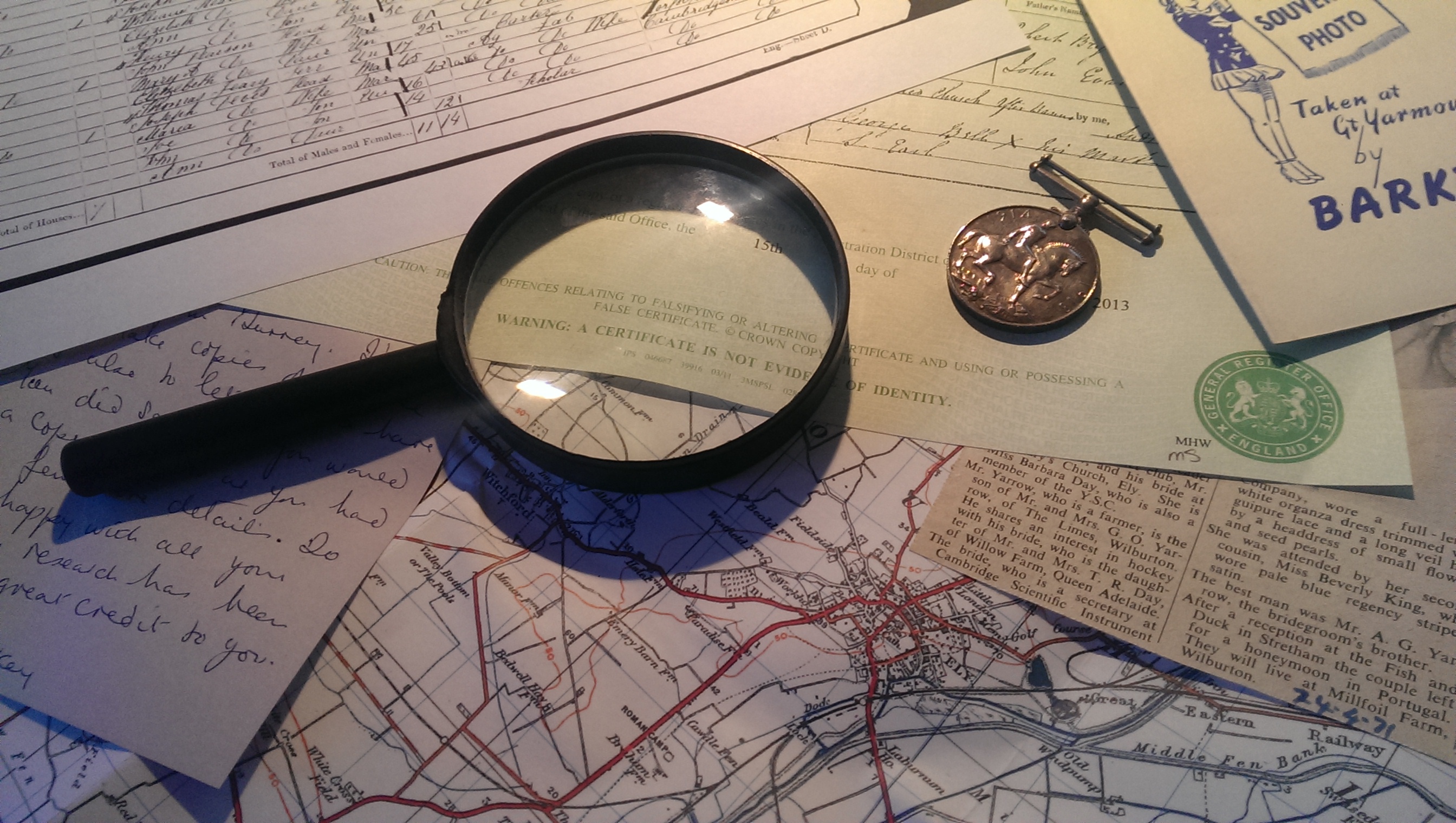
Photograph of maps, documents and a magnifying glass
Photo: Andrew Martin.


Q1. What is the Society’s biggest need?

For the first question, all three Societies were pretty much united in their answer. Their biggest need is people.

Societies rely on the time and expertise of those who can spare even just an hour a month, through to those who can offer a more regular amount of time. Not only does this volunteering offer skills to a society, but often those skills have value to the volunteer – particularly if they are looking to build their CV. Volunteers help societies to develop, and ultimately work more efficiently, and actively contribute to their evolution. Without those people who give their time for free, some societies may end up lost forever, along with all that they worked to achieve.

In the words of Lisa Newman from The Cambridgeshire Family History Society:

“Our biggest need is to encourage the next generation so that we maintain interest in the future in order to fund projects that preserve original material.”

Where do volunteers come from?

I’m pretty sure that the societies are being pro-active in seeking volunteers, but where might they be advertising? Word or mouth? Events? Their own publications? Perhaps even the media or online?

Volunteers can come from anywhere, and all will have their own interest area, so it can be hard to advertise generally when there are so many nuances that might be the hook to bring someone into helping.

Some volunteers might like to have a firm idea of what they might be doing before they offer themselves up. A few years back, I was working for a charity, and needed about 2-3 days per week help when my workload escalated. I worked alone and we didn’t have the skills in-house, so I wrote a ‘job’ description but for a volunteer, that clearly outlined the type of work they’d be doing and roughly how much time per week this amounted to (although I was clear that it could be flexible). We advertised it through the local business network community and a few local job (online and offline) boards. Within a couple of weeks, and after holding an informal ‘interview’ to work out whether there was a match of interests, the volunteer began working alongside me – they were perfect for the role. She eventually went on to take over my paid role after i left.

Some kind of structure at the outset, helps to give a volunteer a sense of purpose and a goal. If they’re just to do bits and bobs here and there, it might not be so appealing (although that approach might work for some too), as they won’t be able to see where or how their contribution fits in to the overall goals and aims of the society. By giving a volunteer a sense of purpose and responsibility, it can surely only help to keep them happy and interested.

For a bigger and fuller-time society, it might be an option to offer an internship – paying expenses in return for their time (during which they’ll pick up skills), but there’s probably a few legal hoops to jump through with that one, so worth checking before you leap into that.

Q2. What is the Society’s biggest challenge?

It would seem that awareness is the biggest challenge, again for all three societies, and particularly when pitching alongside the behemoths of online genealogy – Ancestry, FamilySearch, MyHeritage, FindMyPast etc.

Finding that niche

Societies hold a vast amount of information around their focussed locale, occupation, surname etc, and these often take the form of personal stories and amateur family histories, family trees, film and audio material that’s been donated to them, physical objects relating to their focus, and a wealth of other gems that hold an important but niche connection to the society’s focus.

Such niche gems are unlikely to be as desirable for the larger websites – who are trying to cater for a wide online audience, and make money from subscriptions by digitising desirable historic ephemera.

WW2 WLA
The stories from people such as this member of the Women’s Land Army may provide societies with their niche. Photo: JamesGardinerCollection via CreativeCommons.

The written history of say, Albert the coal delivery man, or Judith the land girl, might be an incredibly useful historical record of culture, occupation, locale, but of little interest to a wider audience.

My own personal opinion here, is that societies need to focus on finding their niche – something that’s popular and that they can easily handle/facilitate. Maybe it’s events and lectures, or maybe it’s the wealth of these unique records/objects, that are not found elsewhere, and using every PR opportunity to shout about themselves and what they do, in a bid to gain new members and raise awareness of the society.

In the words of Abbie Black from The Society of Genealogists;

“The biggest challenge for a genealogical society is that people are not aware of the vast amount of services a society can provide for members.”

Looking up census returns, family tree research services, and parish records, have all been wonderfully done in the past, but with these large online genealogy sites taking these activities to just a couple of clicks away, I feel that these unique items are the niche, and a society needs to capitalise on them now, and make them accessible and relevant to their niche audience.

Check out this innovative and brilliant example of a one-family-centric reunion event – that was packed with information and was so personal to a smaller group of people. Perhaps a more personal touch to events might help boost societies too?

Q3. How does the Society plan to preserve its knowledge for the future?

This question gave the most mixed answers.

Thankfully, all three society representatives showed that their societies have a plan to preserve their work so that our history can continue to exist in the future. Whether this is by their own pro-active programme of evolution (like the Society of Genealogists or Cambridgeshire Family History Society), or more eventual, by depositing its records and data with another larger society (the Newman Name Society).

defunct formats
Updating technologies will be one way of preserving history for the future. Photo: Andrew Martin.

In yesterday’s posting the Channel Islands Family History Society commented that utilising technology will be one way to keep a society up to speed with the bigger more well-known genealogy organisations/services.

How can we help history societies focus on the future?

Thinking back to the society that Linda McCauley talked of, it may have been that the society had grown out of a labour of love, or maybe it was just too hard to find anyone else who was genuinely interested in (or able to) help.

Geek Taming

If your society is pondering what to do with it’s data or has a technical conundrum, then there are ways to get this moving. It might cost a little, but think of it as an investment into your data or website that would bring it forward and help you and your society be more visible, and ultimately gain members, and funds.

One society that I know (I won’t reveal their name), has a large database of their member’s trees – packed with information. But the database was custom written in what is now old tech called MS DOS which was discontinued in 2000, and the person who wrote the database is sadly no longer alive. The legacy of this is, whilst the data is there and perfectly useable – it relies on an older PC to run it, and it is currently locked in time – without the skills available to unpick it, and export the data into something more modern. It also means that events rely on that old PC being transported to venues in order to delve into their database.

If you’re stuck for the free help of volunteers, a solution might come in the form of outsourcing that through sites like Elance.com and Freelancer.co.uk, where you can identify the job you need undertaking, and then allow people to bid for the work. You can then choose the best deal, and they’ll do the work for you. Each freelancer has a rating – much like sellers on eBay – so you can see which bidder is the most reliable and best for your budget and job.

Another solution, might be to pitch your tech problem (if it’s like the example I gave above) to your local college, to give them a real project to work on. This will give valuable experience to the students, a great PR opportunity for the college, and may well solve the issue.

Locally to me, there’s many active MeetUp groups, one of which where individuals can pitch to a wide range of other experts including developers, copywriters, and designers, in a bid to get them interested in your project.

If you’re stuck for budget for your big development, crowdsourcing might be the answer. It has been highly successful – funding films, music albums, books, apps and all kinds of things through sites like Kickstarter or IndieGogo – where members of the international public can give money to projects they like, often in return for some small incentive (perhaps a free family tree search by one of your members?)

Society Spotlight – and that’s a wrap!

Hopefully some of these ideas will give you inspiration to either join a society, or if you are a society, to find the help you need to keep preserving our heritage for generations to come.

Thank you for the feedback this week, and for all the readers, and sharers of the blog posts. I hope that you have enjoyed my Society Spotlight theme, and perhaps have now become inspired to offer some of your time and/or expertise to a history society local to you, or at the very least, become a member.

Of course, I’d like to say a big thank you to Else Churchill and Abbie Black of The Society of Genealogists, Robert Newman of The Newman Name Society, Muriel Halliday and Lisa Newman of The Cambridgeshire Family History Society, and Linda McCauley. Without their willingness and openness, this series of posts would not have been possible. I hope that my week of blog posts will, in some way, help to bring new opportunities to our beloved history societies.

Andrew

Society Spotlight: How does the Society plan to preserve its knowledge for the future?

Society Spotlight: In today’s post, the history societies take a look at if and/or how they are planning the legacy of their work for future generations.

Today sees the fifth in my series of Society Spotlight posts, and the final question that I posed to the three history societies.

It tackles the big question, that will help ensure that a Society and its members leave a lasting legacy to their community or the history that they work so hard to preserve, avoiding the fate seen by the Cross Family History Society:

‘How does a society plan to preserve its knowledge for the future?’

As all family historians, professional genealogists, and organisations know, if you’re going to invest your time in researching and creating records or filling databases with data, then you need to know that what you’re spending your hours doing, will actually survive into tomorrow, next year, and further beyond.

Where once keeping meticulous paper copies sounded like a good idea, it moved on to formats like microfiche, film, cd-roms, GEDCOM, and more recently that mystical place called ‘The Cloud’, but all of them have pros and cons, so what plans do the Societies have to preserve their work and leave a legacy?

Here’s their answers…

Society of Genealogists logoAbbie Black, The Society of Genealogists

“Many societies, including the Society of Genealogists, are always receiving new materials that are in the process of being preserved. Digitization of original documents makes genealogical materials easily accessible to people who simply can’t come to the Society. Digitization and preservation are also important for the future of a society in the case of a natural disaster. Coincidentally, Dick Eastman’s blog Eastman’s Online Genealogy Newsletter recently published an article on 2 July 2013 concerning a society affected by the Southern Alberta flooding disaster.”

“Understanding the concerns of natural disaster, the society had all of their society’s family history backed up in a cloud storage system, which protected their information from disaster. Societies are constantly storing, backing up, and protecting their data that will preserve information for the future through technology.”

“By reaching out to a new generation of genealogists, societies will be able to preserve their future. Younger people have interest in their own genealogy, and societies are reaching out to those individuals through lectures and social networking to help preserve and continue the work that the society holds most valuable.”

Newman Name Society logo

Robert Newman, The Newman Name Society

“Our archive will probably be placed in the Guild Of One-Name Studies (GOONS) archive.”

Cambridgeshire Family History Society logo

Lisa Newman, The Cambridgeshire Family History Society

“Other than continuing to adapt to new technologies and platforms and by encouraging interest in the Society so that we can engage new members to join the Committee to keep doing the good work that has gone before.”

Do you have a plan?

What are your own plans for preserving your research for a future generation? Do you have a plan? Or are you now beginning to wonder what might become of it? Leave me a comment below, or over at the Geneabloggers LinkedIn group.

Society Spotlight: What is a history society’s biggest challenge?

Society Spotlight: In today’s post, the history societies identify their biggest challenge.

In the 4th of my Society Spotlight themed blog posts, I look at the second of the questions I asked the three responding societies:

‘What is a society’s biggest challenge?’

This question is probably the one with the most variation between organisations, as each one identifies what it is that they are trying to overcome.

Some of the themes in these answers were straight forward and as you might expect, but all of them surprised me with a comment about the expectations of those who contact them – which has probably become more prevalent by genealogy and research TV shows.

Let’s delve into their answers…

Society of Genealogists logoAbbie Black, The Society of Genealogists

“The biggest challenge for a genealogical society is that people are not aware of the vast amount of services a society can provide for members.”

“At the Society of Genealogists, members are allowed free access to the Library, which houses the largest collection of parish register copies, as well as many other record types. The library is helpful for beginners as well as seasoned genealogists. Members also have free access to the online Society data which is always being updated. This includes digital images of original documents, as well as searchable indexes. Members also have access to free advice from volunteer genealogists, including a telephone advice service, one-on-one consultations, search services, lectures, and society published magazines. Members make provision for non-members to use the Society’s Library on payment of a daily search fee.”

Newman Name Society logoRobert Newman, The Newman Name Society

“Our biggest challenge is to get more people to join and be active members. Back in the 1980s and 1990s, people joined and we all worked together searching the county archives, transcribing records and sharing their finds.”

“Nowadays I find attitudes have changed, due I expect to so much information being on the internet, now some people find they have a spare couple of days, so they decide ‘to do’ their family tree, they contact me and expect our archive to have the details of their family sitting there waiting to be given to them.”

Cambridgeshire Family History Society logoLisa Newman, The Cambridgeshire Family History Society

“Our biggest challenges are retaining membership, engaging the next generation, getting the message across to go out and explore the archives and not sit behind a computer screen.”

“Thinking about what we can offer, that the Internet cannot – perhaps ancestral tourism, education, an opportunity to meet with like-minded people and learn from each other.”

Competing with the giants

What stands out here is that the smaller societies are feeling the weight of the larger online family history websites – the Ancestry, Geni, FindMyPast, GenesReunited types, and the ‘instant’ trees that they can seem to give their users (i’ll skirt round the quality of that elephant in the room for now).

Whilst the Society of Genealogists is a much larger society that is perhaps more able to digitize content, what’s next for the smaller societies? How can they attract new members and interests? How are they going to compete in the future?

In tomorrow’s Society Spotlight post, I explore their future, when they answer my question of ‘How does the Society plan to preserve its knowledge for the future?‘.

Do they have a plan to avoid a repeat of The Cross Family History Society’s death?, and the risk that Linda McCauley spoke of in my first post?

As ever, leave your comments below, or join in the discussion at LinkedIn.