Today’s ‘Tombstone Tuesday’ post features a headstone remembering 78 people who died in a tragic barn fire in Burwell, Cambridgeshire in 1727.
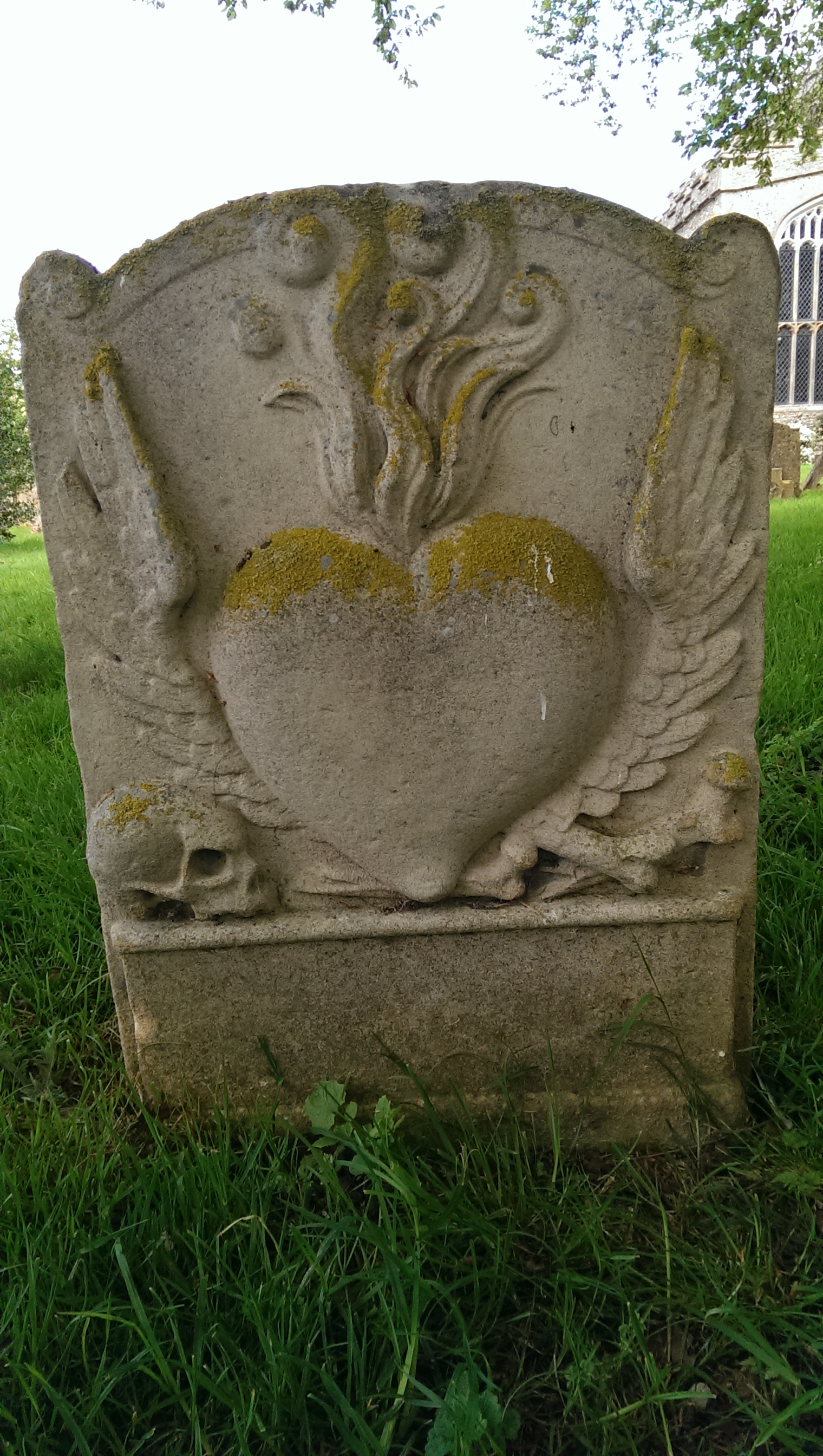
Standing in the grounds of the churchyard at Burwell, Cambridgeshire, is a double-sided headstone, remembering 78 people who burnt to death in a barn fire in Burwell in 1727.
The victims are listed in the Burwell parish burial registers as having been attending Robert Shepheard’s puppet show, and that an unattended candle, left by a servant named Richard Whittaker from Hadstock, Essex, caused the fire through negligence.
The front of the gravestone to the victims of the fire, in Burwell, Cambridgeshire.
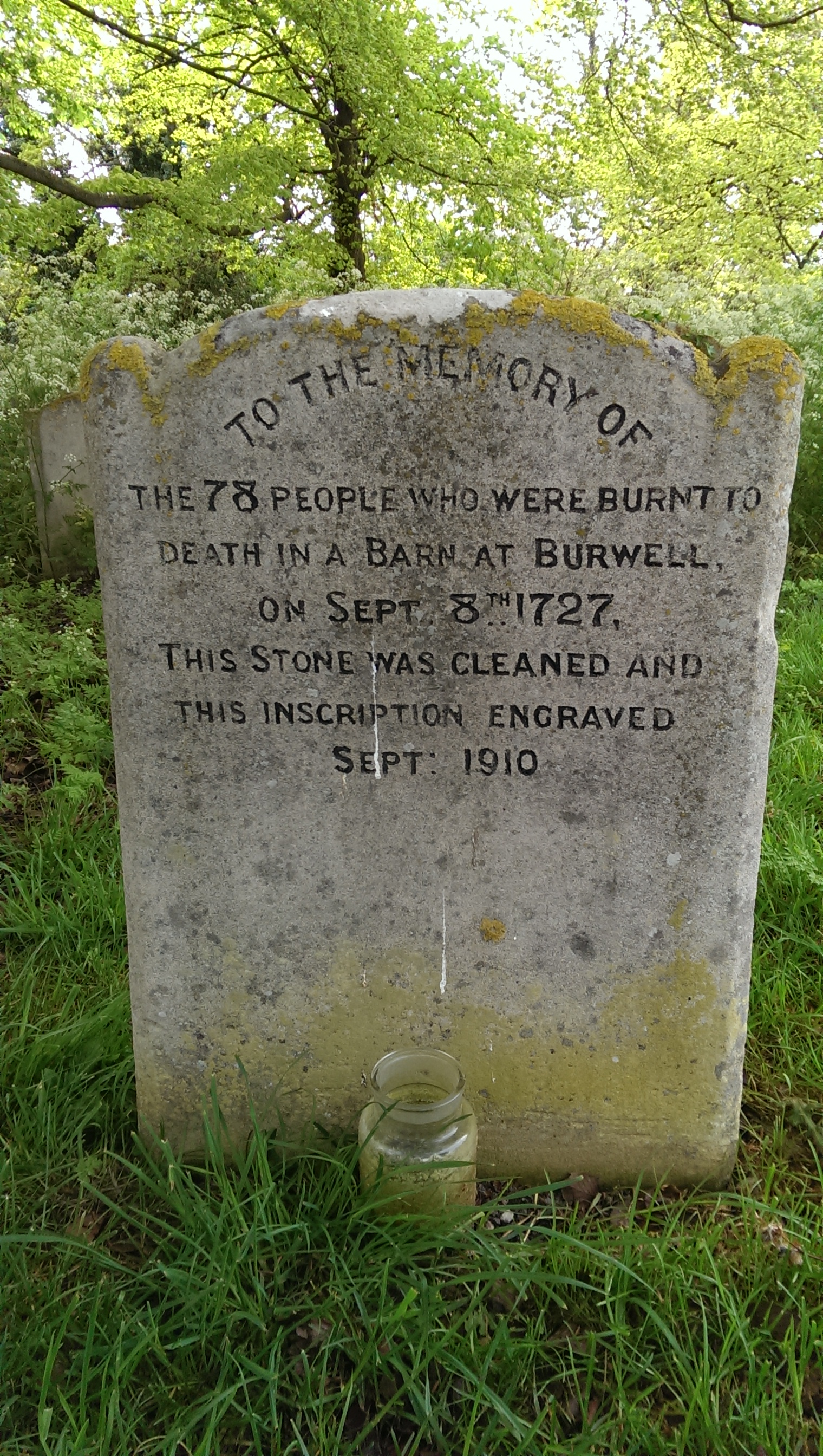
And the opposite side of the headstone carries a note.
The reverse of the gravestone to the victims of the fire, in Burwell, Cambridgeshire.
Robert Shepheard (the master of the puppet show), his wife, daughter, and two servants were amongst the dead.
Richard Whittaker survived and ended up in court. He was acquitted.
A story of 2 Bishops, 7 weddings, and 9 funerals – the struggle of life and love in the 19th century.
If you’re not a fan of Hugh Grant films, then don’t worry – today’s blog post is actually a story of a struggle for life and love in the 19th century.
As the title suggests, this probably isn’t going to be the most cheerful thing you’ve read today.
Only just a few weeks ago, some incomplete ‘parked’ research into two ancestors of mine (a father and a son), had suddenly moved from two male ‘Ag Labs’ in Cambridgeshire whose wives predeceased them, leaving them with several children, to two men who between them, married a further 5 times, and traveled across three counties.
I’d previously parked these two: John Bishop and his son Simpson, as the names connecting to ‘John Bishop’ in the small group of villages that he lived in, were all very similar and seemingly overlaping.
Similarly, Simpson Bishop occasionally appears as ‘James’ or ‘James S Bishop’ or variations on ‘Simpson’ (eg. Simson, Samson etc).
Whilst trawling through the Soham registers, I decided that I needed to map this puzzle out, so took each event with similar names and close dates and used a kind of card-sorting technique with post-it notes, each carrying a name, date, and event.
Breaking down a complicated set of names and dates using ‘card sorting’ for John Bishop’s timeline via Post-Its on a wall.
Having written all the names and event dates onto the post-its, I used each piece of evidence in turn to get them into order. The baptism, marriage, and burial registers were useful, as well as census returns.
Also invaluable here, was to keep an eye on the witnesses at marriages – as these also helped sort the events into an order.
With this done, and post-its on my wall, i realised that I’d just grown some new branches where I thought there were none.
Bishop #1: John Bishop (1795-1868)
John Bishop was born on 1st May 1795 in the Cambridgeshire town of Soham. He was the second of the eight children of Joseph Bishop and his wife Elizabeth (née Clements). He was also my 5x Great Grandfather.
Like his father, John worked in agriculture – a manual labour in the dark, flat, rich and fertile fenland that surrounded where he lived. In 1818, when he was about 22 years old, he married 24 year old Elizabeth Simpson (also of Soham) and the couple settled down to life together.
It’s pretty clear that at the time of marriage, Elizabeth was already pregnant with their first child, my 4x Gt Grandfather, Simpson Bishop.
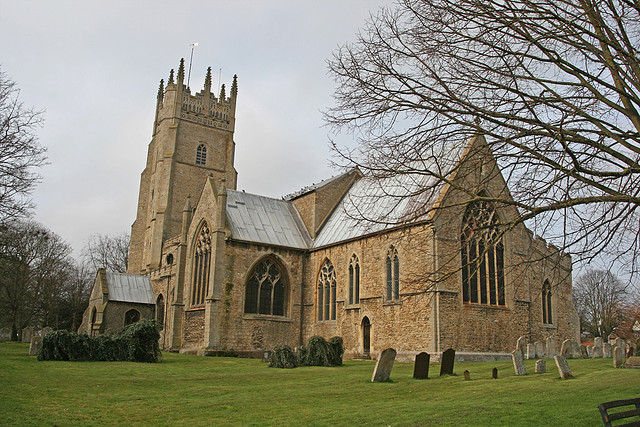
John Bishop would become a frequent visitor to Soham’s St Andrew’s Church. Photo: Steve Day via CreativeCommons.
With Simpson being born in the latter part of 1818, the couple remained in Soham, where they went on to have a second son, John, in 1823.
Elizabeth fell pregnant again in 1825, this time with the couple’s first daughter, but by the time that she (Elizabeth) was born in 1826, her parents’ lives were about to change for the worse. Seemingly, either during or shortly after baby Elizabeth’s birth, Elizabeth, the mother, died. She was just 34.
She was buried at Soham on 11th June 1826, on the same day as her daughter’s baptism. This left 31 year old John Bishop as a widowed labourer with three young children in need of his care.
The grief must have consumed him, but it didn’t stop there – by the August, baby Elizabeth followed her mother to the grave.
Five months later, in January 1827, John walks down the aisle of Soham church with his second wife, Elizabeth Saunders. She fell pregnant shortly after their marriage, but again, bad luck was set to strike. Elizabeth gave birth to baby Elizabeth Saunders Bishop in 1827, but again, it appears that Elizabeth died during or shortly after childbirth. She was buried on 23rd October 1827 at Soham, once again – the same day that her baby Elizabeth was baptised.
Sadly, within a year, this baby also followed her mother to the grave. John, at the age of 33 had married twice, been widowed twice, fathered four children, and buried two of them.
Four months after his second wife died, John returned to church, this time to marry Sarah Leonard, who was fifteen years his junior on 8th February 1828. Their first child, Henry Bishop, was baptised at Soham in April 1829.
Thankfully both he and Sarah survived, with Henry going on to move from the fens of Cambridgeshire, getting married, and moving to Great College Street in Islington, London by the 1880s. John and Sarah continued to have three more children; Mary (who died as an infant), William (who survived and lived next-door to Henry in later life), and Sophy (who died as an infant).
After 8 years of marriage to Sarah Leonard, John (now 41) was widowed again in 1836 – when Sarah was just 26 years old. She was buried in Soham on 17th October 1836.
Less than a year later, John appears to embark on his fourth and final marriage – this time to Martha Earith, 17 years his junior – on 7th August 1837.
However, 8 months later, Martha died, aged 26 years. There is no indication of whether the couple had a child, or whether Martha was pregnant, but it appears that after 42 years of life in the fens, John never remarried. He died in May 1868, aged 73 years.
Bishop #2 : Simpson Bishop (1818-?)
Sadly for Simpson, that oldest child of John Bishop and Elizabeth Clements above, he didn’t escape his own share of bad luck.
By the time that his father had remarried 3 times, and he’d witnessed the deaths and burials of 3 step-mothers, and three half-sisters, Simpson was 20 years old. A few years later, in December 1840, he married Elizabeth Taylor, also of Soham, and by 1842, they became parents to my 3x Great Grandfather, James Simpson Bishop (a nod to the baby’s grandmother). Six further children were born to the couple, during which Simpson worked as a labourer, and a malster.
During 1851, Simpson takes his family to Little Wapses farm in Twineham, Sussex (presumably as tenant farmers), but they return to Cambridgeshire by 1861, by which time Simpson has become a shepherd.
However, Elizabeth dies at some point between 1858 and census night in 1861, in her early forties. There’s a few certificate options here, so i’m busy looking for more clues (newspaper reports, marriage witnesses etc) before ordering a certificate. On 19th June 1861, at Newmarket Register Office, Simpson marries his second wife, Elizabeth Ellinor, a 36 year old daughter of a labourer from nearby Burwell.
Whilst researching, I jumped ahead to 1871 to see where Simpson and Elizabeth were, but couldn’t spot them. I eventually found widower Simpson and his four youngest children living in Reedsholme near Crawshawbooth, Higher Booths, Lancashire – and all employed by the local cotton industry at Reedsholme Works.
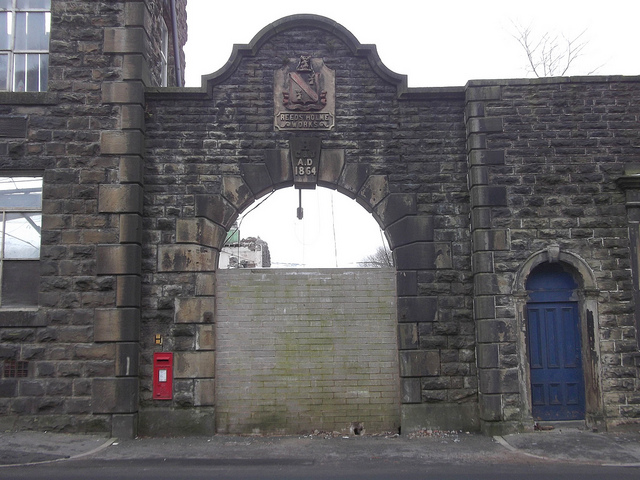
The remnants of Reedsholme Works, where Simpson took his family to work by 1871. Photo: Robert Wade via CreativeCommons.
Life would undoubtedly been hard for the Bishops at the mill, and maybe it wasn’t the new life that they might have originally bought into. By the time of this 1871 census, two of Simpson’s children that had joined him in Lancashire had married:
William to Sarah Swann, who went on to have at least 5 children, and at the time of the 1871 census are living in Little Marsden, Lancashire.
Ann Elizabeth to George Eve.
It even seems that in 1875, whilst the family were up in Reedsholme, daughter Keziah died aged 22. I’ll order her death certificate out of curiosity to see whether it was due to work – as on the 1871 census, she is noted as a ‘Cotton Weaver’.
I found that Simpson, returned to church when on 25th January 1868, he married his third wife Sarah Washington. However, she’s missing from the 1871 family group (presumably dead too), and it’s not clear whether Simpson is married actually on the folio.
Simpson joins Sarah in my research as ‘currently missing’ after the 1871 census, but I hope to find the final steps of his journey.
Did Sarah survive or did Simpson marry again?
A journey that I thought I’d finished with him and his father a long time ago, back somewhere in Cambridgeshire… but which then proved to take me through unexpected twists and turns.
Thanks for reading… I’ll post an update once i’ve got further with Simpson and Sarah, but in the meantime; have you ever used card-sorting to solve a family tree puzzle?
Do you have ancestors who worked at Reedsholme Works, or in the cotton weaving industry?
Leave me a comment below – as i’d love to hear from you.
Memories of attending Wilburton Primary School, Cambridgeshire, during the Edwardian era, including snowstorms and earthworms.
I started school when I was 5 years old [1904].
My mother [Adelaide (née Bishop)] was very good, she used to show us how to write, count and read as she taught the infants at Little Thetford school. Our school [Wilburton Primary] consisted of two rooms – a big one divided by a wooden and glass partition which was pulled across.
Mrs Alma Marchant with children from Wilburton Primary School. Maude is apparently 5ft from left, on the third row. Image: CCAN.
There were over 100 of us with two teachers, Mr Harry Marchant and his wife Alma, who lived in the school house. The school was built on the back of their house.
Strict or soft? Alma A. Marchant mistress at Wilburton School. Image: CCAN.
The girls and infants had to go in the front way. We had a small playground and the laboratories were in a block across there with the fuel shed. We only had a small porch for hanging our coats and bags in, so they had to hang over one another which wasn’t very well on wet days.
There’s something in the water
We had a basket behind the door with a tin bowl on it where we used to wash in and a roller-towel on the door. We used to have to pump water to wash in but we were not allowed to drink the water as we used to pump earthworms up sometimes and our teachers had to fetch their drinking water from another house.
We used to take food with us for midday and go out begging for water to drink. There were quite a lot of us dinner children, as the came from far away places.
Mother always cooked us some hot dinner when it was cold.
Lost in the snow
We lived a long way from school. I remembered my next sister, Jessie and I got lost in a snow storm. We had to walk down a long path. It was dark and snowing hard and the school master had kept us in until 4pm.
The big children ran home without us, so mother ran to the station and told father (the stationmaster) and he had to run up the path looking for us in between train arrivals.
We were lost and it was snowing hard and we did not know which way to go. We were heading the wrong way – back to Wilburton. Jessie was five and I was six.
I think poor old dad didn’t get and tea that night. He used to have to get his meals when he could and if he had to put overtime in when trains were late he had to lay off the next day to make it up.
During dinner times we played with skipping ropes, hoops, tops, marbles and balls. We sat in school at long desks attached and tightly pushed together and it was very cold for those at the back as the stoves didn’t send much heat back there.
Father sent a letter to the school master the day after we got lost, and gave him a good telling off! It was too dark to do lessons, so why didn’t he keep us in?
After that, Mr Marchant let all the long-distance children go home sooner when it was dark early.
Schoolmaster Mr Harry Marchant, with children at the Wilburton Primary School. Image: CCAN.
Making Do
We were very poor as he only brought home about 15 shillings and 10 pence after he had paid house rent and club money.
Father was a good gardener and he grew us plenty of vegetables. He kept bees so that we got some honey and mother made a lot of jam. We used to do sewing and knitting at night when we had washed up.
Mother was good at that and she used to put us right and we used to teach other dinner children. We used to pull old socks undone to do it and children from farms brought fencing nails as needles.
We used to have some happy times, and we used to play in the road.
Passing exams and saying ‘goodbye’
I passed an exam when I was twelve and had to go and work in the fruit gardens to earn a few more shillings but the poor Dr. Banardos children were sent to Canada and Australia to work when they were twelve.
It did seem a shame and we didn’t see them again, poor little things. The people who had them were very upset over that as some of them had had them from babies.
A ‘Next Steps in Family History’ day school (10am – 3.30pm) is to take place on Saturday December 7th 2013, at Cambridge Central Library.
A ‘Next Steps in Family History’ day school (10am – 3.30pm) is to take place on Saturday December 7th 2013, at Cambridge Central Library.
The session will be covering a range of subjects – all of which are essential to researching your family tree – and not just in Cambridgeshire.
Topics include*
Finding and Using Parish Registers
Military Records
Occupational Records
The British Newspaper Archive
Poor Law and other original records
Coffee is served, but lunch is not provided. The library is in the centre of Cambridge, and even contains its own café.
The Day School isn’t free – it’s £25 per place, and going by my years of experience of visiting and communicating with the team at Cambridgeshire Archives and Local Studies team, and The Cambridgeshire Collection, you’ll be in good hands.
Blogging from The Cambridgeshire Family History Society Fair 2013, held in Girton (North Cambridge) on 26th October 2013.
Last Saturday I attended The Cambridgeshire Family History Society Fair.
I think this was the first time that the Fair had taken place, and I was really impressed to see the variety of lectures and stands.
The venue – Girton Glebe School was easy to find and there was plenty of parking for those out-of-towners like me, and with bus stops for those more local. I had a strange flashback of my own primary school, when I found myself sitting on a small red plastic chair in one of the classrooms (although it seemed odd to be doing so whilst drinking a cup of tea).
I didn’t get to take many photos, as the venue was smaller and felt more condensed than other shows I’ve been to, so instead, check out these great photos from the Society’s Facebook Page.
Above: The Cambridgeshire Family History Society stand stood in the entrance with a warm welcome for all visitors. I picked up a couple of cdroms of the Society’s register transcriptions (non-conformists – which have already yielded some great info, and a Quarter Sessions transcript – which i’m yet to explore).
As someone who has been to Who Do You Think You Are? Live a few times, and other Fairs, this one follows a similar style (why fix it, if it isn’t broken?), with a hall with supplier stands, and then ticketed lecture sessions in smaller rooms.
A view of some of the trade stands at the Cambridgeshire Family History Society Fair, 2013
At the stand in the photograph above, I was lucky to find two postcards from Ely – both showing the shop that my Cross family owned and ran in Forehill (I recently referred to it in my blog and newspaper article about the Brown and Co (Ely) Ltd Shop). I chose one (£6!) and I’ve now added it to my collection. Part of me wishes I’d also bought the other one (£8.50!) as it was more of an advertisement card.
A postcard advertising the Cross’ bakery on Forehill, Ely
I was fortunate to get to talk with the Huntingdonshire Family History Society, at their stand, where they kindly looked up my Franks family. Sadly we couldn’t quite find them, but it seems that the parish that absorbed the now near-abandoned Coppingford village, may have retained the records. One day…. ONE DAY!
I found it a little odd for there to be no Suffolk Family History Society, given that they represent the neighbouring county. I overheard a couple of others talking about this too.
I was pleased to catch social historian (and self-confessed non-family-historian) Tom Doig‘s lecture on identifying Victorian photographs. His approach to this topic sounded odd to start with when he stated that you should never try to date photographs via the clothing seen in the photo. He shared with us his knowledge of the history of photography itself (something that I once studied with the Open University) – and explained the importance of looking at the style of the frames and mounts, and also the composition of a photograph as a method of dating it.
Freshly plied with data CDs, a monumental inscription joke from Carol Noble on the CFHS stall, my Cross postcard, and Tom’s advice on photography, I returned home and instantly began searching through my records and photos again.
An enjoyable time, and one that I hope to repeat again soon.
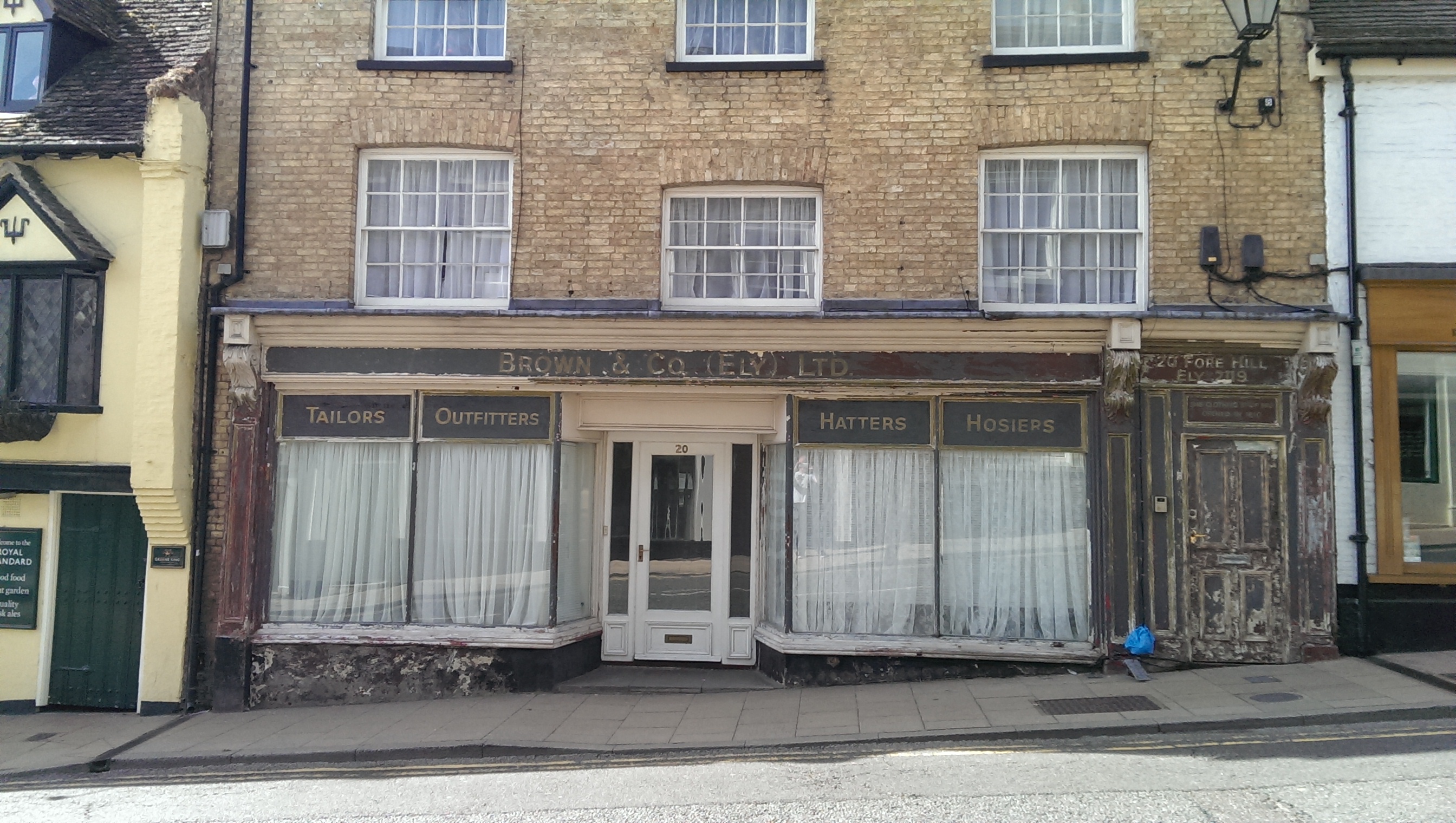
An old shop sign re-emmerges on Forehill, Ely, right nextdoor to the former bakery of my Cross relatives. But what’s the history?
On Sunday, I was enjoying strolling in the sunshine in Ely, when I stumbled across this piece of work-in-progress on Forehill. Intrigued, I couldn’t resist a rummage in the records…
A close-up of the elaborate painted shopfront and proud historical signage.
Fortunately for me, immediately next door, is The Royal Standard pub, which was once two properties – the upper-hill part (and nearest to this shop, and shown in yellow below) was the bakery of Frederick Thompson Cross (my Great Grandmother’s second cousin, twice removed), and later his son Vernon Cross, both relatives of mine.
The shopfront of Brown & Co. (Ely) Ltd uncovered on Forehill, with the elaborate door on the right. The yellow painted building was home to the Cross family bakery.
1901
The 1901 census reveals that Forehill was home to a range of businesses – including confectioner, publican, watchmaker, baker (my family), a boarding house, and a clothier.
The sole clothier on the street, and so likeliest candidate for this shop was Alfred Hammence, aged 51 in 1901, from Ely. With his wife Hannah, they were immediately before the Cross family on the census return.
Alfred and Hannah were joined by their daughters Lilian Mary (22) and Ellen Eugene (20), and Edward Spelman, a 25 year old assistant clothier.
1891
Ten years earlier in 1891, Alfred and Hannah are at the same address, and this time, the location is clearer, with the census naming ‘The Royal Standard’ pub on the other side of the Cross’ bakery. Alfred and Hannah are joined by six children, a boarder, and a servant.
Alfred Hamence, and neighbours the Cross family, on Forehill, Ely, in 1891. Click to see census on Ancestry.co.uk.
1881
Ten years earlier still, Alfred, now aged 31, is living at the property with his wife Hannah and their three sons Bertram (5), Hubert (3), and Ernest (1), and two daughters Lillian (2), and Ellen (2 weeks old). Also with them is William Malthouse, a 21 year old ‘clothier’s assistant’ from Hull, Yorkshire, nurse Lucy Mann (55) from Exning, Suffolk, and servant Elizabeth Lofts (17) from Little Downham.
Next door, in what was yet to become the Cross’ bakery, lives John G Benson, a baker from Norfolk. Frederick Cross at this time was living at home a few streets away in Waterside, where he’s noted as a ‘baker’.
1871
Stepping further back, in 1871, a 21 year old Alfred Hamence is noted is now an Assistant at the same shop – the shop itself being managed by Benjamin Bagg (30), who is noted as ‘head’ of the household, and as a ‘Tailor’s foreman and manager’ from Bethnal Green, Middlesex. Along with Benjamin and Alfred are, Benjamin’s wife Caroline (30), their son Ernest (2), daughter Minnie (8 months), Benjamin’s sister Sarah (35), and William Dobson Carr (14), a ‘clothier’s apprentice’ from Whetherby, Yorkshire.
Again, what was to become the Cross’ bakery, was a bakery already, but it is now run by John Moore, a 41 year old ‘miller and baker’ from Mendham, Suffolk.
Sadly, the 1861 census for Ely was lost in a flood, so my view further back is obscured.
1911
Coming forward again to 1911, Alfred, now 61 years old, remained at the address, as an ‘outfitters manager’, but he is joined by his wife of four years, Agnes Ellen, who at 44 years old, is 17 years younger than her husband. The couple live only with another assistant, Russell George Jude – a 24 year old ‘outfitters shop assistant’ from Mildenhall, Suffolk.
Ornate Evidence
Whilst the ornately decorated sign claims that ‘this clothing shop was opened in 1810′, I don’t have evidence to support that, not least because I don’t have access to any trade directories, or deeds, and of course the useful censuses don’t stretch far enough back, but there seems to be some essence of truth to the business’ longevity here.
Quite who ‘Brown’ was, and going by the suggestion of the shop sign, where the rest of his shops were – that’s all currently beyond the records I can search right now.
I have photographs of my Cross’ bakery nextdoor from 1892, 1896, 1906 and 1960 (as published in Vernon Cross’ autobiography ‘Cross Words’, but all give only about a 1 brick width insight into the style of Mr Hamence’s shop front.
What next for Alfred Hamence’s shop?
I’m hoping that whoever is carrying out this restoration, isn’t about to apply a layer of gloss over this terrific, and historical, signage, and that it will once again be boarded over and preserved, in hiding, for another generation to stumble across on a sunny Sunday.
Alongside genealogy, sits my interest in local history, and so I’m no stranger to many of the great museums we have here in Cambridgeshire – as they are incredibly insightful on the historical context in which my ancestors lived.
Many museums have adopted social media, seeing its importance in connecting community to its history, and using it to promote events and give behind the scenes glimpses of their work and activities that would otherwise go unseen by the public. Many are using multiple channels like Facebook, Google+ and YouTube, and some are also blogging.
Here’s 5 of my favourite Cambridgeshire Museums that are also using Twitter. They’re in no particular order, as i have no wish to be barred from these great places!
1. Denny Farmland Museum and Abbey
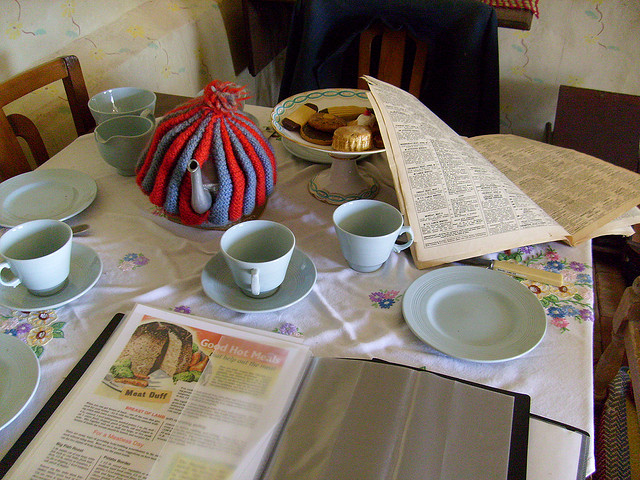
There’s lots to be found at this part-English Heritage site. The Farmland Museum acts as a great reminder of the lives of my agricultural ancestors, with the fantastic backdrop of an Abbey.
Eternal teatime (perfect!) in the period cottage at Denny Farmland Museum and Abbey.
The period cottage is a great place to explore, and really reminds me of some of the ‘gadgets’ that my great grandparents had.
MEDIEVAL FUN THIS BANK HOLIDAY! Buckingham’s Retinue will be returning to the Farmland Museum and Denny Abbey… http://t.co/jZDsEvZxqk
The Norris Museum is my closest museum. It’s a little tucked away through a doorway, and across a garden, beside the river in St Ives, but once inside, you’ll find that the museum is packed with local artefacts – ranging from dinosaurs, Romans, Oliver Cromwell, those witches of Warboys, and ice skating. There’s much more too, and a regular series of events and exhibitions.
The Victorian Operating Theatre at Peterborough Museum – the museum was once a hospital, and so this room has been returned to look like it once did.
I first visited Peterborough Museum with a couple of the team from Living TV’s Most Haunted show, as part of an overnight ghost hunt event! There’s no better way of getting to know a museum, than being locked in the cellar in the pitch dark at 2am.
Since then, the museum underwent a year-long radical remodelling with a £3.2m price tag – and is now vastly improved (although I can’t vouch for that cellar yet). New rooms and displays, with greatly improved cabinets and touch-screen information points, make the museum much more interesting and interactive. They’ve even added a cafe.
The Changing Lives collection documents Peterborough’s 200 year evolution from village to industrial city – using film, audio, and a range of objects – and is a useful reference point for anyone researching family life in this area.
I’m a Friend of Ely Museum, and have been for a few years. There’s a couple of reasons behind this, and they’re both through my genealogical research.
Firstly, during the 1816 Littleport Riots, one of my 5x Great Grandfathers (John Goltrip) was arrested and accused of stealing some silver spoons. He would have been held prisoner here, in this old gaol. The museum has mocked-up what the cells would have looked like, along with the restraints that the prisoners would have been constrained with.
A recreation of what conditions would have been like inside the gaol. My ancestor would have spent some time here in 1816 after his role in the Littleport Riots.
Secondly, in another room there’s a ventriloquist’s dummy and a series of theatre posters – these relate to my distant cousin Vernon Cross (3rd cousin, once removed no less!) – who not only ran the family bakery on Forehill, and was a ventriloquist and magician, but he also founded a huge collection of antiquities, which have since gone on to form an important part of the museum’s collection. A function room at the museum was named after him.
The museum is new to Twitter, but you can find them at @ElyMuseum.
There is also a trail to find original prisoner graffiti throughout the building & a chance to explore the awful conditions if you dare!
The Cambridge & County Folk Museum. Photo: Janet Swisher via Creative Commons.
The Cambridge & County Folk Museum stands not far from the Cambridgeshire Archives. It is home to a great collection of local artefacts that depict every-day life in the city and in the surrounding fenland. It’s been a while since i’ve visited, but I remember walking in and spotting many items that I remember my grandparents and great grandparents having in their homes.
There’s around 30 museums in Cambridgeshire. Some of them are also using social media. Aside from Following or Liking them, why not visit when you’re next in the area?
The first of my Wedding Wednesday blog series, travels back to the sleepy village of Wentworth, Cambridgeshire in 1953.
In the first of my Wedding Wednesday blog series, I’ve decided to travel back to 1953, when my maternal grandparents walked the aisle during April.
In the tiny village of Wentworth, my grandparents married. My grandfather being 21 and my grandmother being 20.
Here’s the final moments of my grandmother as a single woman, on the arm of her father. She was his only child.
And a little bit later, the happy couple emerge. Kudos to my grandfather there for that severe ‘short-back and sides’ look.
And here are the bridesmaids in line.
Some of the wedding party, which includes my Grandparents, Great Uncle, Great Grandparents, and Great Great Grandmothers.
The proud parents – my Great Grandparents – (L-R) Ernest Herbert and Maude Barber, with Susan Jane and Ernest Edward Thomas Dewey.
Finally, Starr & Rignall (a popular photographer’s studio) produced a series of colourised versions of some of the photos. Here’s one of them to give you an idea of the dresses.
The Littleport Society are hosting an Open Day on 20th July. Free entry!
My chums over at The Littleport Society are holding an Open Day on Saturday 20th July.
Held at The Barn, in Main Street, Littleport, the Society will be displaying collections of local memorabilia and photographs, taking family history enquiries, and offering its latest publications via their book stall.
The Society played an important role in my family history research – as the town which it represents, was home to several branches of my family, including Barber, Burnell and Gilbert.
The Barn, Littleport
Doors open at 10am, and the Open Day runs until 4pm. It is free to attend, and light refreshments will be available.
For the latest information about the event and the Society, take a look at their website www.littleportsociety.org.uk
How The Eagle and The Lamb became extinct in Ely, Cambridgeshire, and how my ancestors survived it.
I get a sense of comfort or closeness in knowing that I am visiting somewhere where an ancestor once worked, lived, or even died. I don’t think I am alone in this, but it’s frustrating when you can’t see or visit the place they once knew.
Since then, my goal of seeing a photograph of her now demolished pub had drawn a blank and I aptly put it ‘on ice’. However, I recently received an email from a Robert Flood who had seen my request somewhere online, and had a photograph of the pub on file. This was Vine’s home and business. This was The Eagle and Lamb on Cambridge Road in Ely, Cambridgeshire.
The Eagle and Lamb just before demolition in the 1980s.
You can be sure it’s the same site, going by the distinct chimneys of the house next-door, and that the pub site was also home to the Eagle brewery, part of which has been incorporated into one of the few houses that the newer development contains. The photo is sad, and I can probably understand why it was demolished in 1987/88. The pub closed in September 1932.
The modern day site gives little away – the lampost has seemingly moved a few feet, and perhaps some brick wall survives, but aside from this, there’s no other mark of this once being a place where many patrons enjoyed getting slightly (respectfully of course) sloshed, and where my Great Great Great Grandmother ‘Vine’ Cross and her husband George worked and lived, and for a while seemingly brought up their daughter’s Moden family.
Between George and Vine, the couple had the second longest landlord holding of the property (12 years). They were beaten only by Charles Scarr who held it from 1873 to 1889.
As for the wider history of the site, I turn to ‘Ely Inns’ by Patrick Ashton. As part of his book he has documented its past from the land purchase in 1848. He says:
.. on 7th April 1856, Richard Porter, freehold brewer, purchased the site for £700 and ran his business from there until he sold the premises to Morgan’s Brewery Co. Ltd on 24th June 1889 for £1250. Morgan’s closed the brewery part of the business in 1902 but used the site as a distribution depot until 11th May 1920 when Ely brewers A&B Hall purchased the premises for £5000.
My Great Great Great Grandfather George Cross was landlord from 1892 until his death in 1898, afterwhich he was succeeded by his wife ‘Vines Cross’, who then held it from 1899 to 1904.
In 1901 Sabina appears as ‘Vina Cross’, a 48 year old widow. Joining her at The Eagle and Lamb, are a ‘roadman’Richard Ingrey (67yrs), and William Lemon (44yrs) a ‘railway platelayer’. In two rooms, it is listed that her 30 year old married daughter Mary Ann Moden, was living with there with her husband Edward and their three daughters (one being my Great Grandmother, Susan Jane Moden).
Calling time on pub life
Ten years later, she’s still on Cambridge Road, but living further along on the corner with Barton Road. She’s living alone, aged 58 years, and working as a shop keeper.
Sabina/Vine died in March 1916.
The shop was handed on to her daughter Mary Ann Moden who lived nearby, and the site remained as a shop until the 1980s (during which time I visited it once as a child, but was completely oblivious of my connection to it). It is now a private house.
What next for my Eagle and Lamb research
I hope to now find more records relating to George and ‘Vine’s time at The Eagle and Lamb, and also seek out an old photograph of Vine’s shop whilst it was under her ownership. It seems that there may be a trail of brewery documents to follow, but for now, it remains a mystery.
If you use Google to search for the Eagle and Lamb in Ely, Cambridgeshire, you pretty much only get search results for content that I’ve created. Surely there’s more information waiting to be discovered?










 History Repeating